No. 37: Love’s ‘Da Capo’

June 2, 2009

love-band-psychedelic shotSeconds into the opening track, “Stephanie Knows Who,” it’s clear that “Da Capo” represented new directions for Love and for rock.

A harpsichord dances with guitar in the lovely prelude. A deep-throated sax breaks in. In the break, all of the song’s instruments collide and veer off in different directions. The resulting passage is more in tune with free jazz than psychedelic music — although this is unmistakably a hard rock song.

“Da Capo” was Arthur Lee and Love’s second album, out of three made with the his core group of L.A. musicians. The album was followed and overshadowed by the rock masterpiece “Forever Changes,” but the songs here are streaked with brilliance and innovation. Many musicians’ minds were blown by its collage of sounds and crazyquilt of influences, the material clearly ahead of its time.

“Da Capo” is, in a sense, a more adventurous album than “Forever Changes.” In any case, these tracks are among the finest recordings of Love as musicians. (Much of “Forever Changes” was played by hired hands.)

The band had expanded to seven players, upgraded its drummer, added woodwinds and, of all things, integrated a harpsicord. The first side of “Da Capo” is a lovely experiment in fusing sounds from rock, Latin rhythms, jazz and classical. Lee and company succeed at this without pandering, producing some of their best songs. The second side of “Da Capo,” alas, is dedicated entirely to the notorious jam “Revelation,” which has done great damage to the otherwise brilliant album’s rep.

“Seven & Seven Is” could be the most explosive 2 1/2 minutes in ’60s rock. When rocks fans think of Love, they usually conjure up “Forever Changes,” “My Little Red Book” and this frantic yet somehow cohesive piece. The rage of drums, bass and guitar gives way to the sound of an atomic bomb explosion, accompanied by a jazzy soft guitar. The a-bomb apparently had nothing to do with the song’s content, a visit to Lee’s family living room. The song anticipates punk rock and sonic anarchy. A work that’s forever cool. “Seven & Seven Is” was covered by the Ramones and Alice Cooper among many others.

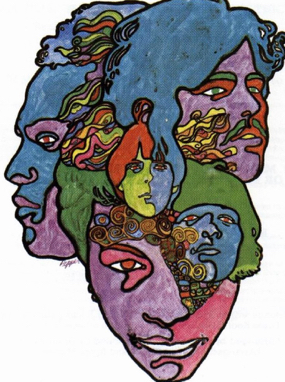
love-da-capo-album-coverLegend has it that Lee and the band’s original percussionist, Snoopy Pfisterer, alternated playing the difficult and exhausting drum part, with no one sure whose work appears on the album. Some versions of the album have a version of the song preceded by 50 seconds of studio patter that captures Lee’s frustration with “take 77.” (Pfisterer, classically trained, moved to harpsichord and organ for this album.)

“Orange Skies,” from the band’s terrific second songwriter Bryan MacLean, brings us the delightfully trippy lyric “Orange skies, carnivals and cotton candy and you.” Touches of samba with Tijay Cantrelli’s flute as the lead instrument. “Que Vida!” continues the theme, with a B3 organ streaming below the surface.

“The Castle” shows off the chops of new drummer Michael Stewart and features a jangly take on Spanish fingerpicked guitar. Listen for the quick detour into dissonance.

“She Comes in Colors” is Love’s version of a power ballad. A flute drifts over the love song, sung with precision by Lee. About 20 seconds in, the song shifts from an easy tempo to barely restrained rock. The harpsichord returns midway though. “My love she comes in colors,” Lee sings over and over. “You can tell her from the clothes she wears.” The care and precision in the production foreshadow “Forever Changes.” Keith Richards said “She Comes in Colors” inspired the Stones’ “She’s a Rainbow.”

The 19-minute “Revelation,” a bluesy/R&B jam that by most accounts Lee and the band came to regret using on the album. It’s all pretty much downhill from the harpsichord intro. There are some good moments about six minutes in, with some Eastern-sounding guitar chops most likely influenced by the Butterfield Blues Band’s “East/West.” (The post-Lee version of Love, with guitarist Johnny Echols, played a stripped-down version of “Revelation” in concert in the summer of 2011.)

At times, the jam brings to mind the Stones or Love’s labelmates the Doors, who debuted that year and were big fans of Arthur Lee’s band. (“Stephanie Knows Who” certainly influenced the Doors’ later “Touch Me,” although that might be producer Paul Rothchild repeating himself.) Yes, there’s a drum solo in “Revelation,” but it’s mercifully brief. Since the core version of Love made only three albums, the loss of a side to filler stings. (Though the laziness probably routed several great songs to “Forever Changes.”)

The album was rereleased several years ago, as a Rhino/WEA import. It offers mono and stereo versions of “Da Capo.” There’s also a collectors “Da Capo” vinyl album put out by Sundazed.

Rhino’s “Love Story: 1966-1972″ provides a good overview of the original band’s recordings.

People who already fans of this groundbreaking band should check out the fine biography Forever Changes: Arthur Lee and the Book of Love

On DVD, there’s “Love Story,”a documentary about the band made in Lee’s final years. He participated fully with the filmmakers.

Get Adobe Flash player