No. 20: ‘My White Bicycle’
April 10, 2012
Tomorrow never arrived. The band had no future. But it left behind one gloriously psychedelic song.
Tomorrow was one of the three “underground” acts to play Joe Boyd’s UFO Club in London of 1966-67. The best known, then and now, of course, is Pink Floyd. Next is line was the prog-jazz outfit Soft Machine. Both of those bands found their places in rock history.
Tomorrow was another matter. Today, those who know of the the band generally do so for one of two reasons:
- Steve Howe of Yes Fame was the group’s brilliant young guitarist;
- The single “My White Bicycle,” beloved by many over the years but bought by few at the time. Despite its head-spinning charms, the song failed to even chart.
A few myths did attach themselves to the song over the years.
Howe and others have been known to call it the first British psychedelic single, although the Yardbirds’ “Happenings Ten Years Time Ago” predated “Bicycle” by seven months.
The song’s breathtaking backward/double-tracked/phased guitar work wasn’t unique to the band, either — although it certainly could be argued that Tomorrow was among the first rock acts to use the technique and make it pleasurably musical.
“It had been done by the Beatles or the Byrds or somebody … everybody (in rock circles) had touched it,” Howe recalled years later. (George Harrison used backward guitar on “I’m Only Sleeping” the summer before.)
A rock folk tale says the “White Bicycle” refers to LSD father Albert Hoffman’s famed two-wheel trip, but alas that one doesn’t stand up, either. The song was inspired by a Dutch socialist scheme of the day in which hundreds of white bicycles were strewn about Amsterdam for the use of one and all.
Vocalist Keith West, who co-wrote the song (as Keith Hopkins), makes the most of his joyride. After a brief psychedelic intro, the guitar digs into the hook. The band quickly adopts a pumping beat and West sings:
Riding all around the streets
Four o’clock and they’re all asleep
I’m not tired and it’s so late
Moving fast everything looks greatMy white bicycle
(My white bicycle) …
“(The main guitar theme) is like a droning sitar sound,” drummer John “Twink” Alder recalls. “We were listening to Ravi Shankar and Gabor Zarbo at the time. So our influences were Indian mainly. Steve may have picked up on that … or he may have just pulled it out of the air.”
Howe credits producer Mark Wirtz for leading him into double-tracking: “I’m suddenly playing and then he says to me, “Let’s play it again,” and I said, “Didn’t you like that?” He said, “That’s great, let’s do it again double-track,” and I kind of went wow. … The way that all got edited was I think quite mystifying to us at first.”
How could so good a song — one with hooks, novelty, ace musicianship and a terrific beat — be simply ignored? Competition probably explains a lot. 1967 was no time for the almost-great. The song came out two months after Jimi Hendrix’s “Purple Haze” mind-fucked the pop world, for example.
Perhaps some of that Beatle magic rubbed off on Tomorrow and its signature song. The Beatles were neighbors at Abbey Road Studios, working on “Sgt. Pepper.” The liner notes to a reissue of Tomorrow’s only album says the Fabs were even present during the mixing. There’s a great rumor in there, somewhere …
Side notes: In 1999, EMI rereleased the “Tomorrow” album. The remastered recording, done from the original tapes, includes a stereo version of “My White Bicycle,” a first. … “My White Bicycle” came out as a single while the band was still recording the album. … Tomorrow disbanded as singer West found fame with producer Wirtz’s concept LP “Excerpt From a Teenage Opera.” Howe joined Yes in 1970. … Club guru turned producer Joe Boyd remembered the song. He wrote a book called “White Bicycles: Making Music in the 1960s.” … Steve Howe revived the number as the final number of his “Pulling Strings” solo tour and album. … The persistence of “My White Bicycle” can be attributed in part to its inclusion on compilation sets such as “Nuggets: Original Artyfacts from the First Psychedelic Era, 1965-1968.”
No. 79: ‘San Francisco Girls’
January 16, 2012
Fever Tree was another in the long line of Texas bands that migrated to California in the psychedelic era.
Before the Houston group made its move, however, it celebrated the charms of the Bay Area ladies with “San Francisco Girls (Return of the Native),” an intriguing single that (barely) cracked the Billboard singles chart in 1968.
“San Francisco Girls,” written by manager/producers Scott and Vivian Holtzman, came on the heels of the 1967 hits “San Francisco (Be Sure to Wear Flowers in Your Hair)” sung by Scott McKenzie and “San Franciscan Nights” by Eric Burdon. Fever Tree’s song certainly holds up its end of that city trilogy.
“San Francisco Girls” opens as a ballad with a tasty but improbable dance of harpsichord and cymbal. Vocalist Dennis Keller sets the scene as a flute eases in:
Out there it’s summertime
milk and honey days
Oh, San Francisco girls with
San Francisco ways
The reverie is short-lived: A guitar amped for heavy sustain repeats and speeds the opening theme until the song works itself into a gallup.
The singer then delivers the cold-hearted kiss-off at the heart of the story — perhaps importing the ‘tude from Fever Tree’s garage-band days:
Don’t try to stop me girl, you can’t have your way
Don’t try to stop me girl, nothin’ you can say
Live like you wanna live and stay where you wanna stay
I just gotta go and get back to the Bay
The tempo shifts several more times before the cinematic finale is ushered in by soaring sustain-drenched guitar.
“San Francisco Girls” gets its punch from guitarist Michael Knust and percussionist John Tuttle. The elegance comes from classically trained multinstrumentalist Rob Landes, who did the harpsichord bit. Producer David Angel of “Forever Changes” fame apparently worked on the song as well.
(Coincidence, no doubt, but “San Francisco Girls” brings to mind the Guess Who’s “American Woman,” of two years later, right down to Burton Cummings’ vocals.)
“San Francisco Girls (Return of the Native)” brought a modest fame to Fever Tree and endured as a free-form FM favorite.
The original band issued one compelling album, “Fever Tree,” featuring several tracks of the same quality as “San Francisco Girls” as well as some contemporary covers. Sundazed recently rereleased this, Fever Tree’s first album.
Then came the less ambitious “Another Time, Another Place” and the career-crashing “Creation.”
Sundazed also has released “Live ’69″ on vinyl/download (the band’s farewell performance).
No. 77: ‘Ball of Confusion’
October 28, 2011
Motown’s hitmaking machine flirted with psychedelic sounds in the late 1960s, in large part a commercial move intended to keep the label relevant and clicking with the beautiful people.
Leading the way were the Temptations, a group in transition after the departure of troubled lead singer David Ruffin.
The group fell under the influence of of Sly and the Family Stone — whose “Dance to the Music” arrived like a thunderbolt in early 1968 — and convinced producer Norman Whitfield to bring some of that funk, chaos and communal vibe to the Temptations’ sound. In particular, the Temps liked the Family Stone’s technique of changing singers multiple times during a song.
The first “psychedelic soul” single out of Motown was “Cloud Nine” (October ’68). Criticized as a pro-drug song, it nonetheless reached No. 6 on the Billboard Pop chart. It sprawled over 3 minutes and 37 seconds, an eternity for soul singles of the time. The Temps, for the record, denied “Cloud Nine” was a drug ditty, but no one believed them.
Then came “Runaway Child, Running Wild” (No. 6, 4:53), “I Can’t Get Next to You” (No.1, 2:51) and (another drug song) “Psychedelic Shack” (No. 9, 3:56).
On the Temps’ psychedelic soul albums, some of the songs ran considerably — “Runaway Child” doubled in length — and the stereo studio stunts came into play. (AM radio was mono, of course.)
The most successful Temps’ song in terms of the psychedelic aesthetic came last: “Ball of Confusion (That’s What the World Is Today).”
Like the other psychedelic soul songs, it coated the ace Motown songwriting in a wash of sonic special effects. Whitfield’s bag of tricks included double-tracked guitar, wah-wah, fuzztone, reverb, phase-shifting and dizzying stereo imaging.
Many of Motown’s “psychedelic” songs felt like affectations, but “Ball of Confusion” was different. It could go toe-to-toe with Sly Stone at his heaviest.
“Ball of Confusion” worked its magic at a frantic pace, building to some serious head-spinning disorientation. Here was a mind-bending song, among the most radical of Top 10 1960s singles.
The lyrics seemed left-wing political, but they spoke to much of America. In 1968, people simply were overwhelmed and sick of the turmoil.
So many problems to cite, and so the lyrics devolve at several points into a listing of the world’s woes. The following verse was delivered lightning fast by three singers:
Eve of destruction, tax deduction
City inspectors, bill collectors
Mod clothes in demand
Population out of hand
Suicide, too many bills
Hippies moving to the hills,
People all over the world are shouting “End the War”
Key moments: The cool producer’s count-in, the Funk Brothers’ unexpected heaviness, Stevie Wonder’s harmonica, the free-form drumming and, especially, Melvin Franklin’s Greek chorus contribution: the deep-voiced “And the band played on …”
One of the record’s most memorable lines was “the Beatles’ new record’s a gas.” Perhaps a throw-away, but in ’68 it played like an olive branch from blacks to whites.
And the fusion of hippie rock and Motown soul became manifest for one glorious moment.
No. 13: ‘Time Has Come Today’
July 26, 2011
The producer called for more cowbell and the Chambers Brothers happily complied. Thus was forged “Time Has Come Today,” the most famous of the hippie soul classics.
“Time Has Come Today” was everywhere in the late 1960s. The song kicked serious ass as a jukebox number, sounded great blaring out of a VW van’s AM radio, and proved plenty mind-blowing for free-form FM radio.
The number was written by Joe and Willie Chambers (according to the disputed credits). The first-person tale of displacement was inspired by the waves of hippie transients headed for the coasts. (A simpler reading would be that of a man thrown onto the streets by love gone wrong.) The high-speed call-and-response format reminds the listener that time never lets up:
Now the time has come (time!)
There’s no place to run (time!)
I might get burned up by the sun (time!)
But I had my fun (time!)
I’ve been loved and put aside (time!)
I’ve been crushed by the tumbling tide (time!)
And my soul has been psychedelicized (time!)
Even as pop radio eased up on its song-length restrictions, the Chambers Brothers’ 1968 hit was far too long for prime time: more than 11 action-packed minutes. Columbia, which rejected an earlier version of the song, found success with two single versions: one at 3:05 and the other at 4:45.
Brian Keenan’s psychedelic percussion work dominates the song, but everyone remembers the cowbell that kicks things off (as a Brother cries “coo-coo”). It was played by Lester Chambers. Throughout, the bell is used to represent the ticking away or speeding up of time — or its Einsteinian distortion. At the end of the song, the cowbell winds down in dramatic fashion, making the ending as memorable as the beginning.
What makes “Time Has Come Today” a psychedelic rock classic — rather just a terrific rock song — is its thundering middle section, an in-studio jam.
Let’s have a listen:
It’s like an echo chamber in here. A heavily distorted guitar flirts with a phrase from “Little Drummer Boy.” An electrified sitar flies by. Screams, primal howling, maniacal laughter — the ingredients for a bad acid trip. All this swirling around The Cowbell.
The producer was David Rubinson, who’d just worked with one of the top San Francisco bands, Moby Grape. The song required one glorious take. Psychedelicized, indeed.
The song made the Chambers Brothers an immediate draw on the rock festival circuit, sometimes playing on the same bill as Pacific Gas & Electric, another California-based interracial act that brought blues/soul music into the almost exclusively white rock scene. (Sly and the Family Stone found fame in this period as well.) The Chambers Brothers were regulars at the Fillmore.
As a bow to “Time Has Come Today’s” iconic status, the PBS documentary series “American Experience” uses the song as its theme music. That’s just one of dozens of appearances “Time Has Come Today” has made in films and TV, often in connection with scenes of Vietnam War protests. “Coming Home,” with Jon Voight and Jane Fonda, used the song most effectively, for a drawn-out scene of violence.
Artists who covered “Time Has Come Today” include the Ramones (video below), Steve Earle & Sheryl Crow, Willy DeVille and Joan Jett.
A new generation knows the song via the video game “Homefront,” which uses “Time Has Come Today” in a key helicopter action sequence.
No. 66: ‘Hey Joe’ by Jimi Hendrix
April 6, 2011
“Hey Joe” seems like it’s been around since the frontier days, but when Jimi Hendrix recorded that tale of a revenge and murder, it was only 5 years old or so.
In that short time, “Hey Joe” — aka “Hey Joe, Where You Gonna Go” — had been covered by the Leaves, Love, the Byrds, the Music Machine, the Shadows of Knight and the Standells, along with every garage band on your old block.
The Leaves hit the charts with their third recording of the number, in 1966, although the year before the song had spread like wildfire through the California rock scene.
Most sources agree that the author was U.S. folkie Billy Roberts, who holds the copyright. The singer-songwriter Dino Valenti was credited as the author on some recordings, although that may have been with Roberts’ blessing.
Tim Rose, who probably started the fiction that “Hey Joe” was a traditional song, took to playing “Hey Joe” as a slow burner. Rose, too, claimed partial songwriting credit.
Hendrix’s version credits Roberts as the writer, but in the liner notes the guitarist calls it “a blues arrangement of an old cowboy song that’s about 100 years old.” Hendrix probably was joking, but it added another red herring to the “Hey Joe” saga. (Read all about the clusterfuck that is “Hey Joe’s” history.)
Tim Rose’s version of “Hey Joe” probably inspired Hendrix to make it part of his act before going to England — the Rose and Hendrix versions are similar in pace, arrangement and vocal backing.
Slowing down high-speed rockers and making them “heavy” was a staple technique of psychedelic rock in those years (see Iron Butterfly, Vanilla Fudge and Blue Cheer), so Hendrix could have have gotten there on his own.
The Jimi Hendrix Experience’s “Hey Joe” opens as a straightforward blues, with Hendrix alternating his vocal delivery a tad to emphasize the question-and-answer format. The female backup singers are fairly hot in the mix, at the request of the guitarist, still trying to find his voice as a frontman.
For the first half, Mitch Mitchell’s drums and Noel Redding’s bass simply keep the beat. As the song moves forward the drumming becomes increasingly aggressive, a suggestion, perhaps, that Joe is starting to lose it. This is a conversation, after all, with a murderer fresh from the kill.
At the 1:40 minute-mark, “Hey Joe” morphs into an Experience song, as Mitchell’s now-busy playing reaches full speed and Redding delivers the signature bass line (used by most bands from “Hey Joe’s” beginning). Hendrix issues a fluid solo, short and simple.
By song’s end, head-banging is in full effect.
The Jimi Hendrix Experience’s “Hey Joe” of 1966 remains by far the best-known versions of the song, and certainly one of the best. It appeared on the first Experience album in the States as the third track on side 1. In England, “Hey Joe” was the group’s first single (b/w “Stone Free” in December 1966) and as such wasn’t included on the album (as with many Beatles hits). The U.K. omission was made right in the CD era.
Like most of Hendrix’s top songs, “Hey Joe” found its way into several movies and TV series, including “Star Trek: Deep Space Nine.” “Forrest Gump,” “Wayne’s World 2,” “The Wild Life” and “Crooklyn.”
No. 44: ‘Maggot Brain’
September 3, 2010
The legend goes like this: Funkadelic maestro George Clinton delivered to Eddie Hazel the sad news that the young guitarist’s mother had just died. Now play a solo, Clinton said as the tape rolled.
The musicians may or may not have been on Yellow Sunshine acid at the time. Clinton may have actually told Hazel to play as if his mother had just died, and then as if she had been resurrected. Only George Clinton knows for sure, it seems.
There’s no doubt that the resulting 10-minute song — a psychedelic instrumental for the most part — ranks as one of the great rock guitar works of all time. “It really is a cosmic song,” Clinton says of the 1972 masterpiece.
“Maggot Brain” owes much to Jimi Hendrix, obviously, but Hazel’s guitar playing sounds dirtier, heavier and more tortured than anything the master performed. If Hazel’s signature song was a drug, it would be heroin.
There are echoes of spooky Pink Floyd in the simple supporting guitar pattern played (by Tawl Ross) as an intro and throughout the song. As the opus unfolds, we sense the influence of electric Miles at his darkest.
Clinton’s production sends the guitar tripping back and forth between the two stereo speakers, an ongoing phase-shifting swirl that adds to listener disorientation without wearing out its welcome.
Like most of the guitar greats, Hazel builds his solos as if in conversation. He has plenty to say here. “I wanted to make the guitar an extension of my singing,” Hazel told Guitar Player. “My style is really like solo vocalist guitar.”
One music critic described the song as Funkadelic’s “A Love Supreme.”
Two decades after it was recorded, “Maggot Brain” was played at Eddie Hazel’s funeral. Hard to imagine a more fitting eulogy for the drug-ravaged genius of funk-rock guitar. “Maggot Brain” was one of his nicknames.
Rock and heavy metal guitarists have long regarded the recording as a touchstone. Rolling Stone and Guitar World both listed it among their top guitar pieces of all time. Mojo magazine writers listed the “Maggot Brain” album as the No. 4 guitar album of all time, trailing works by Hendrix, the Who and Howlin’ Wolf (Hubert Sumlin).
Hazel’s song reached a new generation of listeners a few years back with its appearance on the Fox TV show “House.” In Cleveland, DJs have made a tradition of playing the song at a set time each Saturday night.
There exist several mixes of “Maggot Brain,” with and without this spoken intro:
Mother Earth is pregnant for the third time
For y’all have knocked her up.
I have tasted the maggots in the mind of the universe
I was not offended
For I knew I had to rise above it all
Or drown in my own shit.
The 2005 Maggot Brain album features a bonus mix that brings up the Funkadelic musicians’ playing.
There also exists an audiophile 180 gram vinyl version of the album.
Parliament Funkadelic continues to play Hazel’s song in concert.
Whoever posted this version on YouTube cut off the opening rap, to interesting effect. Dig.
No. 28: ‘Help, I’m a Rock’
August 1, 2010
Frank Zappa took no drugs, but his headphone masterpiece “Help, I’m a Rock” launched zillions of LSD trips back in 1966.
That’s “Rock” as in acid rock.
Zappa explained this nine-minute serving of madness as the result of a bunch of people fooling around in the studio. “It was just a thing that spewed out,” Zappa said a decade later. “What was happening was what was in the air that night.”
Those madmen happened to be ace musicians, making the extended piece as much an exercise in free-form jazz as in psychedelic music. “Note the interesting formal structure,” Zappa deadpans in the liner notes.
“Help, I’m a Rock” delivered the goods to wannabe hipsters drawn to the Mothers of Invention’s first album by the promise of a “Freak Out!” (Mostly, the listeners received a heavy dose of greasy pop parodies and dip-shit doo-wop.)
Young Zappa schooled himself in multitracking before he ever got a record deal. Here he layers screams, duck calls, alien beeps and chatter, tribal chants, a female orgasm — all in the service of the deadpan vocal drone “Help, I’m a Rock.”
For a while, the lyrics go something like this, with rock producer Kim Fowley speaking in tongues …
Ay-yo ee-ow-ee-ow-ee
Veni-ma-no too mah
Veni veni ka toree tor (see’dra votra nee!)
Vedi-vedi ki-ta-la tom-bay
Vel-lay ka-la tay-la-tor
Vel-lay kay-la ta-la-sor
Vel-lay kay-lay ka-la-tor
… and then we hear from the Rock itself (Zappa):
Wow, man, it’s a drag being a rock
I wish I was anything but a rock
Heck, I’d even like to be a policeman
Hey, you know what?
You know maybe if I practice, you know
Maybe if I pass my driving test
I could get a gig driving that bus that pick the freaks up
In front of Ben Frank’s, right?
Before long comes the ghostly question: “Who can imagine, that they would freak out in Kansas?” (and other unlikely spots) — a clutch of vocal nonsense prefacing a Cecil Taylor/Sun Ra-inspired detour into space jazz, with piano solo by Zappa. Spaced is the place.
One reviewer called Zappa’s “Freak Out!” experiments “the greatest stimulus to the aspirin industry since the income tax.”
“Help, I’m a Rock” started life as a “suite in three movements”: “Okay to Tap Dance,” “In Memoriam Edgar Varese” and “It Can’t Happen Here.” The back album cover and original master tapes from the “Freak Out!” sessions show the title as simply “Help, I’m a Rock.” In the CD era, “It Can’t Happen Here” began to appear as a separate track and it was included solo on some compilations.
In concert, the Mothers would mix “Help, I’m a Rock”with other early Frank Zappa numbers, such as “Hungry Freaks Daddy.”
Zappa wrote in the liner notes of his sonic collage: ” ‘Help, I’m A Rock’ is dedicated to Elvis Presley. Note the interesting formal structure and the stunning four-part barber shop harmony toward the end. Note the obvious lack of commercial potential. Ho hum.”
Long term, the psychedelic workout had plenty of commercial appeal, with Zappa’s bands playing it throughout the master’s career. “Help, I’m a Rock” became one of the many catch phrases attached to Zappa over his career.
An abbreviated “Help I’m a Rock” was released as the B-side to the 1966 DJ-only single “How Could I Be Such a Fool.”
The studio recording’s players were Zappa, Ray Collins, Black, Roy Estrada (“boy soprano”) and Elliot Ingber.
No. 50: ‘Atom Heart Mother’ suite
June 28, 2010
The year 1970 found Pink Floyd in search of a title for their latest musical exploration, a psychedelic suite of sorts.
Roger Waters picked up a copy of the Evening Standard newspaper, in which he found a story about a woman about to receive a nuclear-powered pacemaker.
Voila!
And so we have “Atom Heart Mother,” one of the band’s most-debated works, a sprawling suite that’s by turns exhilarating, monotonous, hypnotic, pretentious and primeval.
Waters, creator of “The Wall,” later suggested that the piece should “never (be) listened to by anyone ever again.” Guitarist David Gilmour called it “pretty horrible” — “absolute crap.”
Rolling Stone agreed, calling the suite “awful schmaltzy” and “a step headlong into the last century … a dissipation of (Pink Floyd’s) collective talents.”
So of course plenty of Pink Floyd diehards love the “Atom Heart Mother” suite, all 24 minutes of it.
In 1970, Pink Floyd had been performing in concert an extended piece that would come to be variously known as “Theme From an Imaginary Western,” “Epic” and “Amazing Pudding.” Gilmour and Waters reportedly wanted to write a classically structured work around its themes, but came up frustrated. They turned to British avant-garde composer Ron Geesin, who’d done an offbeat side project with Waters.
Geesin arranged the work, calling in the John Aldiss Choir and an orchestral brass section, which collectively soared above the psychedelic band’s basic tracks of guitar, drums and keyboards. Of the Pink Floyd members, only Gilmour gets a solo section. Other key instruments in the piece are French horns and cello.
The suite consisted of six parts, the parameters of each on the fuzzy side:
- Father’s Shout
- Breast Milky
- Mother Fore
- Funky Dung
- Mind Your Throats, Please
- Remergence
Father’s Shout sneaks in with 30 seconds of near-silence — a faint buzz. French horns manage a woobly fanfare, soon set straight by a display of of Pink Floyd’s rock muscle. We hear horses and motorcycles moving through as the French horns play bravely on, establishing the “Atom Heart Mother” theme.
Breast Milky offers a cello part, framed by Richard Wright’s loopy organ riff and a supple bass. Gilmour’s slide guitar turns things back to rock, with the horns reasserting the suite’s theme.
In Mother Fore, the choir sings as if in Mass, backed by Hammond B-3 organ. Here is the softest of these six passages. The rock band returns in the lengthy section’s final minute, providing much-needed relief.
Gilmour’s guitar and Wright’s B-3 take the wheel in Funky Dung, a white boy blues jam straight out of 10 Years After. The chorus goes native, descending into an aggressive chant right out of “The Exorcist.” The main theme returns in full throat, drums pounding as the French horns slice the air. Here is “Atom Heart Mother” at its best.
The section Mind Your Throats, Please, at first recalls the Beatles’ “Number Nine,” electronic noodling evolving into metallic din. The careful listener is rewarded here … while others may flee. Gilmour again wields his slide, coaxing band, choir and horns back to full power. The choir ends it all with a heroic burst that’s straight out of a swords-and-sandals score.
While the critics stood about unimpressed, the “Atom Heart Mother” album went to No. 1 in Britain. Stanley Kubrick was among the fans of the curious suite: He sought permission to use the work in “A Clockwork Orange,” but was denied. (The director subsequently refused to let Waters borrow images from “2001: A Space Odyssey.”)
Despite Gilmour’s dumping on the suite over the years, he turned up to play his guitar part when pal Geesin revived “Atom Heart Mother” in 2008, complete with chorus and orchestra.
No. 87: ‘They’re Coming to Take Me Away’
June 4, 2010
As 1966 ushered in the psychedelic era, a New York songwriter got stoned and decided to check out his mind. The result was one of the most sinister and bizarre novelty songs of all time: “They’re Coming to Take Me Away Ha-Haaa!”
Who could say how many bad trips this twisted piece of work wrought back in the day.
Working as “Napolean XIV,” Jerry Samuels rapped the story of a man driven insane by the disappearance of his girlfriend (or, ahem, dog).
Borrowing a trick from “The Chipmunks” novelty records (“Alvin!!!”), Samuels used a variable frequency oscillator to speed his voice to various maniacal levels. He addressed the evil woman (or faithless dog) in first person:
Remember when you ran away and I got on my knees and begged you not to
leave because I’d go berserk? Well …
You left me anyhow and then the days got worse and worse and now you see
I’ve gone completely out of my mind. And …
They’re coming to take me away, ha-haaa!! They’re coming to take me away, ho-ho, hee-hee, ha-haaa
To the funny farm. Where life is beautiful all the time …
Adding to the intensity was a self-made drum loop that recalled Bob Dylan’s propulsive “Rainy Day Women,” released four months earlier. Samuels says it actually comes from the Scottish march “The Campbells Are Coming” (listen).
Samuels says that during recording he realized he was writing a truly sick song, and put it aside. It wouldn’t die. Later, in an attempt to leaven the creepiness factor, he added a line about the offender being a “mangy mutt.” It didn’t help much.
Kids loved it regardless. “They’re Coming to Take Me Away Ha-Haaa!” shot to the top of the charts, pounding out of jukeboxes and car radios nationwide.
Adding to the bizarre history, Napolean XIV used a backward version of the song as the B-side of the 45. “!aaaH-aH ,yawA eM ekaT oT gnimoC er’yehT” was a forerunner of the “Rick Roll” meme, with kids eagerly inflicting it on captive audiences, such as people eating in diners. The rock critic Dave Marsh dubbed this backward menace “the most obnoxious song ever to appear in a jukebox.”
The A-side single, meanwhile, was banned by various radio stations, including WMCA and WABC in New York. “It was a hit before it got banned,” Samuels said. “Once it got banned, it was finished.”
Jerry Samuels, who performs standards and such these days, discussed the making of “They’re Coming to Take Me Away, Ha-Haaa!” in a definitive Napolean XIV interview posted by Song Facts.
Rhino reissued the Napolean XIV album in the 1980s and then again in expanded form in the 1990s (“The Second Coming.”)
This most twisted of novelty songs lives on today, having lost none of its sonic jolt. It has inspired various YouTube shorts and covers by indie bands such as Lard and Neurotic Fish (below). Let’s just hope Tarantino doesn’t get his hands on it.
No. 30: ‘Iron Butterfly Theme’
March 28, 2010
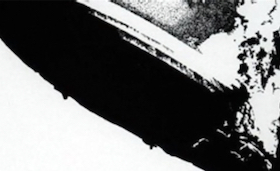
Probably a coincidence, but Iron Butterfly beat Led Zeppelin to that heavy-light name game by at least a year. You know, the iron (or led), as ballast for the delicate flying creature (or dirigible).
The Southern California band also anticipated Led Zep’s mix of punishing riffs and ethereal wails with “Iron Butterfly Theme,” a wordless monster of a song that set an early standard for hard acid rock.
The 4 1/2-minute instrumental, recorded in 1967, demonstrates why Iron Butterfly has been called “the father of heavy metal” by Def Leppard and other headbangers. The Butterfly boys even called the album "Heavy."
“Theme” covers the life cycle of an iron butterfly, beginning with the throbs of birth, then the exhilarating flight, then the crash-and-burn accompanied by the devils of feedback and anarchy.
Throughout, keyboardist Doug Ingle’s organ dances and duels with Danny Weis’ distorted guitar as tribal drums pound away. As a coda, Morse code announces the death of the bellowing beast … fade to black. It’s as cinematic a song as there is in rock.
Nothing quite like “Iron Butterfly Theme” had been recorded before, except, perhaps, for the sonic chaos of the Beatles’ “Tomorrow Never Knows.” This was proto-metal, as if Pink Floyd had recorded while tripping on horse tranquilizers.
Giving the song its unshakable creepiness is Ingle’s chanting — the echo of demented monks, perhaps. A warning of medieval horrors to come. Or, at least, something from the slab at Hammer Films.
There also exists a heroic quality that summons up another movie — picture a Schwarzeneggerian warrior holding his blade high to the skies, seeking the final reward of a lightning bolt. Like in “Heavy Metal” the movie, come to think of it.
Ingle called the group’s sound an exercise in “melodic consciousness.” That path soon would lead to “In-A-Gadda-Da-Vida,” the 17-minute psychedelic slog for which the band is remembered today.
Fame came fast and faded in a few short years. The group was a victim of its musical bloat and inconsistent recordings — outplayed and outflanked by other West Coast psychedelic bands.
But for that first glorious 4 1/2 minutes, Iron Butterfly soared.