Soft Machine’s Hugh Hopper dies

June 12, 2009

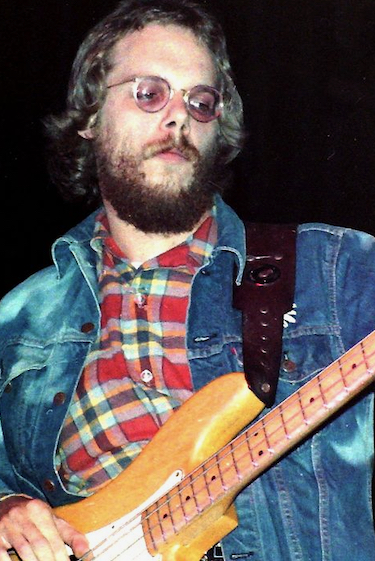
hugh-hopper-prog rock bassistThe bassist Hugh Hopper, a contributor to a sea of progressive bands but best known for his tenure with Britain’s pathfinding Soft Machine, has died. He was 64.

Hopper was one of the central figures in the Canterbury music scene, both before and after his days with Soft Machine. He joined the band as a roadie and then took over on bass in 1968, after the departure of founder Kevin Ayers.

He was among the first bassists to successfully apply fuzz-tone effects to the instrument. His playing anticipated the jazz-rock styles of Jaco Pastorious and Stanley Clarke, but Hopper’s playing was rarely flashy. He had a Motown-like dedication to anchoring the ensemble playing.

Hopper played and contributed songs to almost all of the Soft Machine’s classic works (the second through sixth albums), as the band moved from psychedelic musings to fusion/progressive rock.

One of the most influential Hopper compositions was the trippy, noisy, sometimes atonal “Facelift,” which opened the “Third” album, clocking in at 19 minutes. The avant-garde showcase brought to mind the contemporaneous explorations of Frank Zappa and Miles Davis.

On the “Fourth” album, he contributed “Kings and Queens,” a more traditional jazz rock piece with a cinematic feel. His Soft Machine song “Memories” was recorded by Whitney Houston. (continued)


Hugh Hopper was an early innovator in the use of tape loops as foundations for instrumental improvisation. His first solo album, after he left Soft Machine in 1973, include a side-long sonic collage.

The bassist fronted his own bands and also worked with Gong, Carla Bley, Dave Stewart, Stomu Yamash’ta and Gary Windo, among many others.

Hopper worked with most of the like-minded European players of the past four decades. His long list of collaborators included old Soft Machine mates such as Elton Dean, the free jazz saxophonist.

In the new century, Hopper celebrated his Soft Machine years in the bands Soft Works and Soft Machine Legacy.

The bassist worked until June 2008, when he had to cancel a tour of Japan due to back problems. He then learned he had leukemia. Several benefit concerts helped cover medical expenses. Hopper died June 7 in the county of Kent, England, two days after marrying his longtime girlfriend.

Pink Floyd’s Richard Wright dies

January 21, 2009

richard-wright-syd-barrettPink Floyd keyboardist and founding member Richard Wright has died at age 65.

Wright’s circus of sounds — odd, spooky, lush or piercing as the occasion required — was the foundation of the psychedelic music the London-based band rode to the top of the rock world.

Guitarist/singer David Gilmour said: “In the welter of arguments about who or what was Pink Floyd, Rick’s enormous input was frequently forgotten. He was gentle, unassuming and private but his soulful voice and playing were vital, magical components of our most recognized Pink Floyd sound.”

Wright co-wrote the “Dark Side of the Moon” centerpiece “The Great Gig in the Sky” and contributed to almost all of the band’s classics of 1960s psychedelia.

Wright was born in London in 1943. In school, he joined a rock and R&B band with guitarist Roger Waters and drummer Nick Mason, playing American covers under various names, including the Tea Set.

Syd Barrett joined the group, which became Pink Floyd. Barrett steered the band toward a mix of curious twee pop, and then into the early works that led to full-blown psychedelia on albums like “Ummagumma,” “Atom Heart Mother” and “Meddle.” Barrett, who died in 2006, left Pink Floyd as a result of his LSD use and mental problems.

(Wright, left, is pictured with Barrett.)

The keyboardist released a pair of solo albums. He clashed with Waters and left the band briefly. Wright reunited with Gilmour and Mason in the fractured Pink Floyd that survived the stormy exit of Waters in 1985.

Wright died on Sept. 15, 2008. The cause of death was cancer, his publicist said.

« Previous Page

Get Adobe Flash player