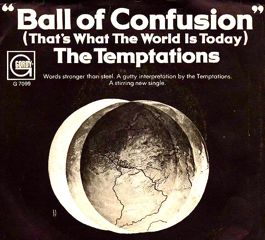
No. 77: ‘Ball of Confusion’

October 28, 2011

psychedelic soul single from MotownMotown’s hitmaking machine flirted with psychedelic sounds in the late 1960s, in large part a commercial move intended to keep the label relevant and clicking with the beautiful people.

Leading the way were the Temptations, a group in transition after the departure of troubled lead singer David Ruffin.

The group fell under the influence of of Sly and the Family Stone — whose “Dance to the Music” arrived like a thunderbolt in early 1968 — and convinced producer Norman Whitfield to bring some of that funk, chaos and communal vibe to the Temptations’ sound. In particular, the Temps liked the Family Stone’s technique of changing singers multiple times during a song.

The first “psychedelic soul” single out of Motown was “Cloud Nine” (October ’68). Criticized as a pro-drug song, it nonetheless reached No. 6 on the Billboard Pop chart. It sprawled over 3 minutes and 37 seconds, an eternity for soul singles of the time. The Temps, for the record, denied “Cloud Nine” was a drug ditty, but no one believed them.

Then came “Runaway Child, Running Wild” (No. 6, 4:53), “I Can’t Get Next to You” (No.1, 2:51) and (another drug song) “Psychedelic Shack” (No. 9, 3:56).

On the Temps’ psychedelic soul albums, some of the songs ran considerably — “Runaway Child” doubled in length — and the stereo studio stunts came into play. (AM radio was mono, of course.)

The most successful Temps’ song in terms of the psychedelic aesthetic came last: “Ball of Confusion (That’s What the World Is Today).”

Like the other psychedelic soul songs, it coated the ace Motown songwriting in a wash of sonic special effects. Whitfield’s bag of tricks included double-tracked guitar, wah-wah, fuzztone, reverb, phase-shifting and dizzying stereo imaging.

Many of Motown’s “psychedelic” songs felt like affectations, but “Ball of Confusion” was different. It could go toe-to-toe with Sly Stone at his heaviest.

“Ball of Confusion” worked its magic at a frantic pace, building to some serious head-spinning disorientation. Here was a mind-bending song, among the most radical of Top 10 1960s singles.

The lyrics seemed left-wing political, but they spoke to much of America. In 1968, people simply were overwhelmed and sick of the turmoil.

So many problems to cite, and so the lyrics devolve at several points into a listing of the world’s woes. The following verse was delivered lightning fast by three singers:

Eve of destruction, tax deduction
City inspectors, bill collectors
Mod clothes in demand
Population out of hand
Suicide, too many bills
Hippies moving to the hills,
People all over the world are shouting “End the War”

Key moments: The cool producer’s count-in, the Funk Brothers’ unexpected heaviness, Stevie Wonder’s harmonica, the free-form drumming and, especially, Melvin Franklin’s Greek chorus contribution: the deep-voiced “And the band played on …”

One of the record’s most memorable lines was “the Beatles’ new record’s a gas.” Perhaps a throw-away, but in ’68 it played like an olive branch from blacks to whites.

And the fusion of hippie rock and Motown soul became manifest for one glorious moment.

No. 29: ‘Spirit’ (debut album)

October 26, 2011

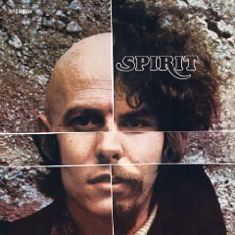
first album cover by psychedelic band SpiritThe great and criminally underappreciated L.A. band Spirit rarely makes the list of the ’60s psychedelic groups.

These days Spirit mostly is remembered for “Nature’s Way,” an FM radio classic. It’s a wistful midtempo plea for ecological sanity that appeared on the original band’s fourth and final album.

Two years before “Nature’s Way,” in 1968, a much heavier Spirit blasted its way onto the scene with another ecological warning, this one awash in psychedelic touches and heavy guitar.

The band sang:

Look beneath your lid some morning
See those things you didn’t quite consume
The world’s a can
for your fresh garbage

That serving of tight, light-heavy rock soon was followed by the dark psychedelic masterpiece “Mechanical World.”

As a one-two punch, these side 1 tracks from the album “Spirit” rank up there with any psychedelic concoctions served up in 1967 or 1968 by Hendrix, Cream or the San Francisco bands.

Spirit never settled for only one style, however, and its first album reflected the bandmembers’ backgrounds in jazz, blues, ethnic music, folk and hard rock. The distorted guitar and overlaid reverb of “Fresh Garbage,” for example, retreats for a midsong jazz piano break by John Locke, who’d played in a jazz combo with drummer Ed Cassidy.

You could make the argument that anything guitarist Randy California played sprung from a seed of psychedelia. For good reason.

At age 15, the guitarist hooked up with an undiscovered Jimi Hendrix.

“I paid a visit to Manny’s Music in Manhattan,” California wrote in the liner notes to the “Spirit” CD. “It was there, in the back of the store jamming on a white Stratocraster, I saw Jimi James. Our eyes met and time seemed to stop” (cue swelling music).

Young California joined Jimi James and the Blue Sparks, playing Cafe Wha in Greenwich Village for three months. When Hendrix left for England, the teenage guitarist’s mom said he couldn’t go.

How much of Hendrix came from California — and how much of California came from Hendrix — remains a mystery since neither had made solo recordings at this point. Someone who’d never heard the album “Spirit” probably could be convinced that Hendrix played guitar.

On the 5-plus-minute “Mechanical World,” California delivers two jaw-dropping solos, the first among his best. At one point his heavy-sustain guitar soars until it’s unbearable — then crashes to the ground to great dramatic effect.

In fact, everything “Mechanical World” is played for maximum drama. Jay Ferguson’s vocals sound as if they were summoned from the grave. The funeral drums send home the lyric: “Death falls so heavy on my soul/Death falls so heavy, makes me moan.”

The strings of arranger Marty Paich do a graveyard dance with California’s guitar, sometimes playing in unison. The song ends as if it were the soundtrack to a film, with elegiac strings ushering out the listener — until a final guitar/drums burst puts the nail in the coffin.

In spots, “Mechanical World” anticipates Led Zeppelin’s “Kashmir” of 1975, bringing us to the next song …

“Taurus,” written by California, is a lovely instrumental, built around fingerpicked guitar arpeggios. Heard fresh today, the number would be perceived as a loose “Stairway to Heaven” cover.

But Led Zeppelin recorded “Stairway” three years after “Taurus,” the classic power ballad arguably another in the long line of Zep’s “borrowed” songs.

California wrote in the “Spirit” liner notes that fans often asked about the similarity and he responded by saying the bands toured together in their early years and that Led Zeppelin covered “Fresh Garbage” as part of a hard-rock medley.

“Girl in Your Eye” makes precise use of the Indian sitar sound introduced to rock only a year before. Producer Lou Adler worked with the Mamas and Papas during this period and brought a tight aesthetic to many of these songs. Even the longer psychedelic numbers had snap.

“Uncle Jack,” a hard-rocker with a faint English accent, sounds like one of Noel Redding’s contributions to the Jimi Hendrix Experience (Redding would later play with California). It features a great double-tracked solo by California.

“Straight Arrow” was written about bassist Mark Andes’ actor father. “Topanga Windows” re-creates the band’s communal experience in the L.A.-area canyon. “The Great Canyon Fire in General” (more Topanga) features more heavy California licks set amidst a heady swirl of drums and piano.

The 11-minute instrumental “Elija” salutes free jazz and, perhaps, Frank Zappa. Its midsection brings to mind King Crimson. The Butterfield Blues Band’s “East-West” of 1966 almost surely provided inspiration.

Unreleased tracks on Epic’s 1996 reissue of the “Spirit” CD show more of the band’s jazz roots, with the prog rock blast “Verusaka” and the straight-ahead “Free Spirit.”

Jazz was just starting to appear in rock, with Spirit among the earliest purveyors of what came to be known as jazz rock, along with Donovan and Al Kooper’s Blood Sweat and Tears.

(This review written in the foothills of Topanga Canyon. All references to Spirit indicate the original classic lineup, although Randy California and his stepfather, Cassidy, continued to use the name for their bands.)

Dead brings to life Dave’s Pick CD series
October 24, 2011

grateful dead logo for live archival CD seriesThought the Dead marketing machine was done with live archival releases?

Fat chance. The music never stops. Not fade away. And all that …

Six years after the famed series “Dick’s Picks” was retired — and just weeks after the “Road Trips” series reached the end of the road — the Dead’s live legacy continues with “Dave’s Picks.”

Dick was the Dead’s longtime archivist Dick Latvala. Dave is David Lemieux, the current archivist, who took over the job when Latvala died in 1999.

Dave’s Picks will be a numbered limited edition series limited to 12,000 copies (that number could be elastic, based on previous Dead decisions). The CDs will be close to Dick’s Picks in philosophy, Lemieux says, featuring complete shows.

The Dead’s website promises “the finest unreleased shows from the master tapes, brought to life with HDCD sonics by Jeffrey Norman, period photos, and informative liner notes.”

The first release comes from a May 25, 1977, show at the Mosque in Richmond, Va.

Dead.net offers an advance subscription package with a lower price ($95) and a bonus disc.

“This is the most excited we’ve been since the ‘View from the Vault’ (DVD) series,” says the excitable Lemieux, who says 90 percent of his personal listening time is spent on Dead audio.

“Mostly it’s going to be two-tracks (as with the Dick’s Picks and Road Trips series).”

The archivist invites fans’ input: “We not only welcome your input, we need your input. … There’s too many shows and too many hours. … Everyone’s opinion matters to us. If you think that such-and-such is a great show, we’re going to listen to it.”

To contact the team, email vault@dead.net — put “Grateful Dead” subject line.

In other Dead product news:

  • The 2011 edition of the Grateful Dead Almanac no longer will be printed on paper. “Yes, here in the second decade of the 21st Century (and after a bit of screaming and kicking), we’ve (gone all digital),” the editors say. View the online Grateful Dead Almanac.
  • Rock book author Paul Grushkin (“Grateful Dead: The Official Book of the Dead Heads”) takes another look at the band’s hardcore fans with “Dead Letters: The Very Best Grateful Dead Fan Mail.”
  • The “Road Trips” CD series has come to an end with No. 4. Vol. 5, capturing the Boston Music Hall show from June 9, 1976, and (partly) June 12. The series ran four years and released 17 discs.
  • Lemieux’s massive “Europe ’72, Vol. 2″ had a cup of herbal tea on the Billboard album charts, topping out at No. 193 in the week of its release.

Concert review: The Yardbirds in L.A.

October 10, 2011

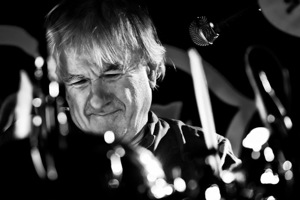
2 live yardbirds playing bass and rhythm guitarPlaying fast and loose, the Yardbirds rolled into L.A. with their latest crop of talented young musicians. An audience that started out waiting to be impressed ended up cheering and howling its approval of the still potent U.K. band.

No mere oldies act, the group sometimes bill themselves as the Most Blueswailing Yardbirds. For good reason: After almost a half century, they remain terrific (rock) interpreters of the U.S. blues masters.

The set list from the Canyon Club (in L.A.’s west Valley) included Bob Diddley’s “I’m a Man,” Howlin’ Wolf’s “Smokestack Lightning” and Eddie Boyd’s “Five Long Years,” all Yardbirds’ showstoppers since the mid-’60s. The band’s own “New York City Blues” and “The Nazz Are Blue” fit right in there with the American classics.

(Photos by Arnie Goodman. They are of an earlier tour stop in New York.)

Two original Yardbirds remain, the rhythm guitarist Chris Dreja and drummer Jim McCarty, both sizable contributors to the original sound. (For example, both receive songwriting credit on most of the album that came to be called “Roger the Engineer,” the group’s best studio album.) They’ve been reviving the Yardbirds on and off for 20 years, since the band made it into the Rock and Roll Hall of Fame.

style="margin: 0px 10px 5px 0px" />Dreja and McCarty didn’t stray from the canon, even though they’ve recorded several well-received albums over the years.

The crowd expected the hits and key album tracks, and got them: “Heart Full of Soul,” “For Your Love,” “Over, Under, Sideways, Down,” “Shapes of Things” and “Mister You’re a Better Man Than I.”

The Yardbirds often are credited with creating the first psychedelic record, “Happenings Ten Years Time Ago.” (It’s number 10 on our list of the Best Psychedelic Singles.) That Beck-Page workout blew a few minds at the show. The band thoughtfully threw in the trippy studio chatter from the record, delighting the hardcores.

Filling out the Yardbirds lineup are the guitarist Ben King and two relatively new members (2009), singer/harmonica player Andy Mitchell and bassist David Smale.

King has the monumental task of following the Yardbirds’ 1960s godhead of guitarists — Eric Clapton, Jeff Beck and Jimmy Page. (Beck’s been known to pop up at Yardbirds’ gig or two, but no dice this night.)

ben king of the yardbirdsKing did yeoman’s work on most of the numbers, but kicked into high gear for the Page songs: “Little Games” and the original “Dazed and Confused.” Drummer McCarty pointed out that although Page had gone on to play “Dazed” with “some other group,” well, they did it first. (The song was titled “I’m So Confused” back in ’68.)

Singer Mitchell wisely didn’t try to imitate original singer Keith Relf, but on harmonica he sounded uncannily like the late rock star. Mitchell drew cheers several times, including one bit where he finished a song singing quite audibly without the help of a microphone. He delivered all the humor and cock-rock attitude needed for a smoking “The Train Kept A-Rollin.’ ”

Bass player Smale hit the walloping turnaround bottom notes and flourishes that were a key part of the band’s original sound — much like the Animals, the Yardbirds built some of their best songs around an infectious bass-line. The young man has the 1960s heavy bass thing down to an art.

Keith Relf often said that no one ever captured the real Yardbirds on record — the live performances were everything. Good to see tradition carry on.

Get Adobe Flash playerPlugin by wpburn.com wordpress themes