No. 13: ‘Time Has Come Today’

July 26, 2011

time has come today the chambers brosThe producer called for more cowbell and the Chambers Brothers happily complied. Thus was forged “Time Has Come Today,” the most famous of the hippie soul classics.

“Time Has Come Today” was everywhere in the late 1960s. The song kicked serious ass as a jukebox number, sounded great blaring out of a VW van’s AM radio, and proved plenty mind-blowing for free-form FM radio.

The number was written by Joe and Willie Chambers (according to the disputed credits). The first-person tale of displacement was inspired by the waves of hippie transients headed for the coasts. (A simpler reading would be that of a man thrown onto the streets by love gone wrong.) The high-speed call-and-response format reminds the listener that time never lets up:

Now the time has come (time!)
There’s no place to run (time!)
I might get burned up by the sun (time!)
But I had my fun (time!)
I’ve been loved and put aside (time!)
I’ve been crushed by the tumbling tide (time!)
And my soul has been psychedelicized (time!)

Even as pop radio eased up on its song-length restrictions, the Chambers Brothers’ 1968 hit was far too long for prime time: more than 11 action-packed minutes. Columbia, which rejected an earlier version of the song, found success with two single versions: one at 3:05 and the other at 4:45.

Brian Keenan’s psychedelic percussion work dominates the song, but everyone remembers the cowbell that kicks things off (as a Brother cries “coo-coo”). It was played by Lester Chambers. Throughout, the bell is used to represent the ticking away or speeding up of time — or its Einsteinian distortion. At the end of the song, the cowbell winds down in dramatic fashion, making the ending as memorable as the beginning.

What makes “Time Has Come Today” a psychedelic rock classic — rather just a terrific rock song — is its thundering middle section, an in-studio jam.

Let’s have a listen:

chambers brothers psychedelic songIt’s like an echo chamber in here. A heavily distorted guitar flirts with a phrase from “Little Drummer Boy.” An electrified sitar flies by. Screams, primal howling, maniacal laughter — the ingredients for a bad acid trip. All this swirling around The Cowbell.

The producer was David Rubinson, who’d just worked with one of the top San Francisco bands, Moby Grape. The song required one glorious take. Psychedelicized, indeed.

The song made the Chambers Brothers an immediate draw on the rock festival circuit, sometimes playing on the same bill as Pacific Gas & Electric, another California-based interracial act that brought blues/soul music into the almost exclusively white rock scene. (Sly and the Family Stone found fame in this period as well.) The Chambers Brothers were regulars at the Fillmore.

As a bow to “Time Has Come Today’s” iconic status, the PBS documentary series “American Experience” uses the song as its theme music. That’s just one of dozens of appearances “Time Has Come Today” has made in films and TV, often in connection with scenes of Vietnam War protests. “Coming Home,” with Jon Voight and Jane Fonda, used the song most effectively, for a drawn-out scene of violence.

Artists who covered “Time Has Come Today” include the Ramones (video below), Steve Earle & Sheryl Crow, Willy DeVille and Joan Jett.

A new generation knows the song via the video game “Homefront,” which uses “Time Has Come Today” in a key helicopter action sequence.

Mickey Hart’s world of music, collected
July 24, 2011

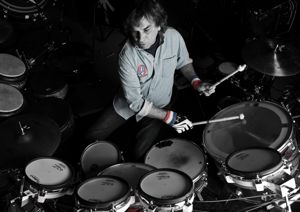
grateful dead percussionistGrateful Dead percussionist Mickey Hart has teamed up with Smithsonian Folkways Recordings to release his expansive archive of world music recordings.

“The Mickey Hart Collection” is set for release Oct. 11, via on-demand CDs, downloads and audio streams.

Releases begin with 25 albums from Hart’s previous series “The World” (originally on Rykodisc). Six of those recordings comprise “The Endangered Music Project,” done with the American Folklife Center of the Library of Congress.

Smithsonian Folkways Recordings is the nonprofit record label of the Smithsonian Institution, the national museum of the United States. Hart said he donated the recordings to the museum because “there will always be a Smithsonian (and) Folkways is the premier indigenous music label.”

Hart began his recordings as world musicians began to perform in San Francisco in the 1960s, but his interest dates back well before his Grateful Dead days.

As a young boy, Hart heard an album of field recordings of pygmies from the Ituri Rainforest “that made my world disappear. … I was entranced by the rhythms of West Africa, by way of Cuba and Haiti. … They were dance music, and I loved music that made you dance. …

“I treated each recording as if it would sell a million copies. So I always always recorded it at the highest resolution and had it mastered at the same place I was mastering the Grateful Dead material.

“It was very important that all this music was released first-rate so that people could understand the importance of it.” (text continues …)

Among the initial recordings are “The Music of Upper and Lower Egypt,” made during the Dead’s 1978 tour of the country. Nigerian artist Babatunde Olatunji is the focus of two albums, as is Brazilian percussionist Airto Moreira (Return to Forever). Other artists hail from American Indians, the rainforests of South America and the Caribbean, the Indonesian archipelago, Tibet and Cuba.

The Mickey Hart Collection includes his “Rhythm Devils: The Apocalypse Now Sessions” and the delivery-room album “Music to be Born By.” It also includes recordings made by other musicologists and producers.

Hart was a member of the Grateful Dead from 1967-1971 and 1974-1995. He continues to play with other Dead members, principally fellow drummer Bill Kreutzmann (as the Rhythm Devils).

Mickey Hart
icon recorded numerous albums of his own work and led several bands.

Check out the Folkways Recordings amazing record catalog and listen to a stream of its world music.

White Stripes in Love: ‘Signed D.C.’

July 18, 2011

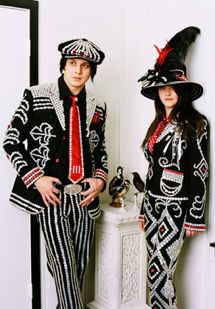
white stripes for post about signed dc by loveThe White Stripes wail no more, but Jack White continues to put out some of the duo’s recordings in limited formats. This time, he’s gone public with a pair of covers, including the druggie Love classic “Signed D.C.”

The White Stripes’ version of “Signed D.C.” can be heard on YouTube (see bottom of post). Earlier, it was released as a 7-inch vinyl under the band’s From the Vault paid-subscription series, via Third Man Records.

A suitably rough recording, it features White on acoustic guitar and vocals, with Meg White (apparently) playing tambourine. There is no harmonica, as heard on Love’s recording.

White also released to YouTube his take on Otis Redding’s “I’ve Been Loving You Too Long.”

In a similar vein, White’s band the Raconteurs previously covered British singer Terry Reid with “Rich Kid Blues,” originally released in 1969. (Reid, a bit of a raconteur himself, tells audiences that the popular 2008 cover inspired him to call up White in hopes of working together. White never called back, Reid says with a sheepish grin.)

“Signed D.C.” appeared on Love’s first album. John Einarson, who wrote the Lee biography “Forever Changes: Arthur Lee and the Book of Love,” describes the original track like so:

With its stark instrumentation, featuring just Arthur alone on acoustic guitar and harmonica, the song offered a harrowing anti-drug message drawn from the real-life experience of drummer Don Conka — the titular D.C.

“When I wrote the song, I heard the Animals’ ‘The House of the Rising Sun,’ ” Lee said in an interview. It was inspired by some of the people who hung out with the band in its early days — strung out on methadone or heroin.

The White Stripes’ “I’ve Been Loving You Too Long” sounds a lot rougher than “Signed D.C.” with a bit of feedback and White’s tentative vocals. Meg White plods along on drums.

(Hat tip to Uncut.)

‘L.A. Woman’ set for massive reissue

July 4, 2011

doors 40th anniversary CD reissue of la womanOn Sunday, the 40th anniversary of Jim Morrison’s death, two of his surviving bandmates — Ray Manzarek and Robby Krieger — visited the singer’s grave at Pere Lachaise cemetery in Paris, where they lit candles and posed for pictures.

Drummer John Densmore, out of synch with his fellow ex-Doors, as usual, wasn’t attending: “I don’t even know the date (of Morrison’s death),” he said. “I prefer to celebrate Dec. 8, his birthday.”

Nostalgia for Morrison and his dark brew of psychedelic rock and collegiate poetry never abated, really, with the 1960s band’s commercial machine cranking out repackaged music and merchandise at a pace surpassed only by the Rolling Stones and the Beatles. Manzarek and Krieger have other musical affiliations, but by and large their careers have been spent chasing the ghost of the Morrison-fronted Doors.

2011 also marks the 40th anniversary of the Doors’ last studio recording with Morrison, “L.A. Woman.” Rhino and the Doors several months ago released a vinyl version of its most celebrated song, “Riders on the Storm” (for Record Store Day), but the motherlode comes this fall.

A 40th anniversary edition of “L.A. Woman” sprawls across two discs, one with a remastered version of the original album and the other with alternate versions of its songs and some studio chatter. The liner notes come from Rolling Stone archive guru David Fricke and the album’s producer, Bruce Botnick. A separate vinyl release contains the disc 2 material.

The big bang for the Doors-obsessed comes in the 40th anniversary app (for various computer platforms), billed as “a redefining of the album reissue using today’s most current technology.” This appears to be the definitive study of the Doors in their final days.

Editorial topics include:

  • Setting the Scene: Los Angeles in 1971.
  • The “cast of characters” involved in the creation of the album.
  • A multimedia re-creation of the “in the studio with the band” experience.
  • The recording sessions/technical background/the creative process.
  • Geo-mapping of the landmarks/places mentioned in accompanying essays, which are written by Fricke, Botnick, Holly George-Warren, Michael Ventura, Barney Hoskyns and Kristan McKenna.
  • Audio and/or video interviews with the surviving Doors plus Botnick, Jac Holzman, Bill Siddons, Marc Benno, and Jerry Scheff.

doors la woman album imageA four-CD box set, the “super deluxe” edition, picks up much of the content from the Doors app with Rhino-style collectors packaging and adds some other materials.

The 40th anni promotion also sees the release of “Mr. Mojo Risin’: The Story Of L.A. Woman” on DVD.

No specific release dates or presale information was released by the Doors’ management. The four-CD box set will be sold exclusively by the Doors’ web site, apparently.

CD background: The surviving Doors remixed “L.A. Woman” a decade ago, but those tracks weren’t included on on single CD release until 2007 (part of another 40th anniversary celebration, for the band itself). The last mega-Doors release was the six-CD, six-DVD box set “Perception,” unleashed in 2006 and again in 2008.

More immediately, there’s the covers project “All Wood and Doors,” from folk veteran James Lee Stanley, who created “Wood and Stones” (with John Batdorf) in 2005. Doors drummer Densmore was a fan of that album of acoustic Rolling Stones covers, and told Stanley he’d be happy to play on a similar project with Doors material.

Stanley, given to two-man band projects, teams up this time with Cliff Eberhardt. Also playing on the album are Doors guitarist Krieger, Peter Tork, Timothy B. Schmit, Paul Barrere and Batdorf.

Krieger and Densmore recorded separately, no surprise because they’ve long been at odds over the Doors’ name and recordings. Keyboardist Manzarek, usually eager to get in on any Doors-related project, is MIA on this guitar-driven project.

“All Wood and Doors” is set for release on June 12 via Stanley’s own Beachwood Records.

The dozen Doors cover songs are “Break on Through,” “Love Me Two Times,” “Take It As It Comes,” “Strange Days,” “Light My Fire,” “Touch Me,” “Crystal Ship,” “Soul Kitchen,” “People Are Strange,” “Moonlight Drive,” “Riders on the Storm” and (short and sweet) “The End.”

Get Adobe Flash playerPlugin by wpburn.com wordpress themes