‘John Barleycorn’ lives, on double CD

March 28, 2011

traffic leader winwood sings jazz rockHere’s a toast to “John Barleycorn Must Die,” the 1970 album that bridges the two Traffics.

The first band, of course, specialized in hip pop and gentle psychedelic sounds such as “Paper Sun.” Traffic the sequel served up a strong jazz-rock brew that utilized a revolving cast of musicians.

Short but sweet, Traffic’s “John Barleycorn Must Die”
icon returns remastered in a double-disc edition from Island-Universal. The new release has the good sense to restore the album to its original six-song presentation. (Previous CD versions inserted two other tracks from the sessions to slug out the running time.)

Hugely influential and widely appreciated at the time, “John Barleycorn” cracked the top 5 in the U.S and went gold in its first year.

Disc 2 of the new set provides a trio of alternate takes* from the hit album and then digs into the good stuff — more than 40 minutes of the band playing the Filmore East in support of “John Barleycorn.” The CD concludes with a 15-minute workout on “Glad/Freedom Rider.”

Traffic fans have been teased for decades with the possibility of an album covering those Nov. 18-19, 1970, concerts. The Filmore shows has been extensively bootlegged and a few of the performances were included on a 1999 version of “John Barleycorn.”

The title song, “John Barleycorn Must Die,” was a traditional English folk song that reflected the band’s rural beginnings — the original members famously found their sound in a distant cottage — as well as the back-to-the-land vibe of the day.

The instrumental “Glad,” however, opened the album with a jazz-rock jolt powered by a jump piano riff from Stevie Winwood. (text continues)

The “John Barleycorn” album started life as a solo project for Winwood, who had just left the free-form supergroup Blind Faith. Traffic broke up in 1969, but when Winwood hit a creative block he turned to ex-bandmates Jim Capaldi (drums) and Chris Wood (woodwinds) for backing on “Glad.”

“It was obvious to all of us that we should really give Traffic another go,” Winwood said at the time. That “go” did not include Dave Mason, who had worn out his welcome. Traffic was back in business and carried on for another four years.

No doubt the album’s fresh sounds can be credited in part to Winwood’s involvement at the time with Ginger Baker’s Air Force, a conglomeration that introduced many rock fans to African music.

john barleycorn 1970 rock albumTraffic’s new sound no doubt influenced Steely Dan, which released its first single in 1972.

Not everyone liked the new flow of Traffic. Rolling Stone’s reviewer thought it was OK, but cited “control-board masturbation” and mused, “Maybe the trio is still just getting together again, feeling each other out.” Robert Christgau missed Dave Mason and crabbed about “feckless improvised rock.”

The expanded “John Barleycorn Must Die” received high marks for its remastered sounds when it was released in Europe on Feb. 28. The double CD came out in the U.S. on March 15. The collection also is available as MP3 downloads.

The Traffic albums received a round of rereleases in the early part of the new century. Let’s hope this release is the vanguard of a catalog-wide upgrade.

* Disc 2′s alternate takes are of “John Barleycorn Must Die,” “Stranger to Himself’ and “Every Mother‘s Son.”

‘Grateful Dead Movie’ going nationwide

March 16, 2011

grateful dead iconJerry Garcia’s 1977 concert film “The Grateful Dead Movie” is being resurrected for one big night, with screenings in about 500 cinemas nationwide.

Tickets went on sale March 18 for the April 20 screenings. The Dead movie is being distributed to cinemas via Fathom Entertainment’s digital cinema network.

The movie offers a mix of performance, documentary footage and what was cutting-edge animation for the time. It was filmed and recorded at San Francisco’s Winterland Arena in 1974, during what was supposed to be the Grateful Dead’s farewell concert stand. The Deadhead phenomenon receives almost as much attention as the band, with plenty of footage of fans — some cool, some annoying.

“The Grateful Dead Movie” has been released several times on home video and its five-CD “soundtrack” offers a sonic experience far beyond that offered by the film.

The album “Steal Your Face” covers the same event, but was disowned by the Dead as focusing too much on songs and not jams. Famed soundman Owsley “Bear” Stanley dismissed the double album even though his legendary Wall of Sound audio system was used during the stand. Critic Lester Bangs called the album “Steal Your Money.”

Regardless, the movie was directed by Jerry Garcia and comes from the early ’70s, an era widely considered to be the Dead’s best. The band included Keith Godchaux and Donna Godchaux. Songs in the movie span the Dead catalog up until that time, stretching from to “Morning Dew“ to “Eyes of the World.”

Deadhead favorites include “Playing in the Band,” “One More Saturday Night,” “Casey Jones,” “Stella Blue” and “Sugar Magnolia.”

Here’s Gary Gutierrez’ animated segment for “U.S. Blues”: (text continues)

Organizers say a bonus feature at “The Grateful Dead Movie” screenings will be an “exclusive” unseen interview with Dead guitarist Jerry Garcia conducted while he was directing the project 35 years ago. (The DVD has an extensive lineup of extras.)

Rhino Entertainment, which handles the Dead’s CD and download releases for Warner, is the co-presenter.

View the list of cinemas showing “The Grateful Dead Movie.”

Owsley Stanley dies: the Dead’s ‘Bear’

March 13, 2011

lightning logo for Grateful DeadOwsley “Bear” Stanley, the hippie LSD purveyor who bankrolled the early Grateful Dead and revolutionized its psychedelic sound, has died. He was 75.

Stanley died in a car crash in his adopted home of Queensland, Australia, on March 13.

Although chiefly known for his exploits in manufacturing and marketing the LSD that fueled the San Francisco cultural revolution of the 1960s, Owsley played a major role in the Dead’s development. He created the band’s legendary “Wall of Sound” concert audio system and co-designed the human skull-lightning bolt logo for the psychedelic music band.

Another iconic Grateful Dead image, the dancing Bear, was inspired by Stanley’s brief stint as a ballet dancer. (Bear was a family nickname for Stanley.)

Stanley’s contributions to the counterculture were rewarded in song, with numbers such as Jimi Hendrix’s “Purple Haze,” Jefferson Airplane’s “Bear Melt” and “Mexico,” the Grateful Dead’s “Alice D. Millionaire” and Steely Dan’s “Kid Charlemagne” hailing his exploits. The band Blue Cheer (“louder than God”) took its name from some Owsley acid.

He is credited with making the first public address system dedicated to rock concerts (the Wall of Sound) with its innovative system of onstage vocal monitors.

“We’d never thought about high-quality PAs,” the Dead’s Bob Weir told the San Francisco Examiner in 2007. “There was no such thing until Bear started making one.”

Stanley said he played a key role in the founding of goundbreaking guitar maker Alembic and the concert sound equipment manufacturer Meyer Sound.

The LSD guru was the dead’s first soundman and soon took to recording all of the band’s performances — “sonic journals” he called them. More than a dozen albums have been made from his tapes, most notably the first, 1973′s “Bear’s Choice” (Warner Bros.).

“I always recorded all the bands and all the sets I mixed on all my shows like some people keep a diary, at least so long as I had enough money to buy reels of blank tape,” Stanley wrote on his Bear web site.

The early recordings spawned the decades of amateur audience tapes done at Dead Shows, with the band’s blessings. But, Stanley wrote, “From the feedback I have had, and the tapes I have listened to, I estimate 30% or more of both audience and ‘board’ tapes/CDs are either mislabeled or faked.

“There are many tapes in circulation which claim to be of “rare” shows. The reason these shows are “rare” is usually because they never happened.”

Dead guitarist-singer Weir said after Stanley’s death: “I met Owsley at the age of 18. I had just left home, having run off with a rock & roll band. Bear, as we knew him, was one of my all-time biggest influences. Always, when I think of him, I think of the endless stuff he taught me or somehow made me realize; all stuff that I’ve been able to use to the benefit of countless people.”

Arthur Lee’s ‘Black Beauty’ surfaces

March 4, 2011

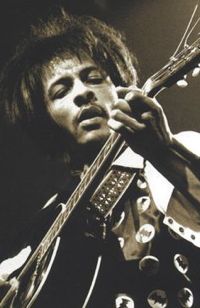
love singer Arthur Lee from book coverCalling it among the “rarest of rock artifacts — a never-before-released full-length studio album from an undisputed musical genius,” High Moon Records has set Arthur Lee and Love’s “Black Beauty” album for a June 7 release.

“Black Beauty” is no label reject. It was produced by Paul Rothchild, famed for his work with the Doors, Janis Joplin and the Paul Butterfield Blues Band. Rothchild also produced Love’s second album, “Da Capo,” for Elektra.

“Black Beauty” was to come out on indie label Buffalo Records, owned by Michael Butler (producer of the musical “Hair”). The label went belly-up before Lee’s “Black Beauty” was released. Bootlegs have long been circulating, but no legitimate release of the LP ever materialized.

Lee’s widow, Diane, has been trying to get the album out there in the years since his death. “Arthur Lee fans won’t be disappointed,” Lee biographer John Einarson writes in his (excellent) 2010 book “Forever Changes: Arthur Lee and the Book of Love.”

Among the tracks recorded at the “Black Beauty” sessions were a hard-rock cover of the jangly folk hit “Walk Right In” from 1963 and “Beep Beep,” Lee’s first attempt at reggae. The Lee songs “Good & Evil” (aka “I’m Good & Evil (Do What I Do),” “Midnight Sun” and “Product of the Times” were resurrected from a 1971 Love session at CBS — compiled by Sundazed Records in 2009 as the album “Love Lost.”

The “Black Beauty” band was all-Afro American, led by longtime pal Robert Rozelle (bass). Rozelle put the band together for the album because Lee’s “Vindicator” band fell apart due to money disputes. Drummer Joe Blocker, from Lee’s old neighborhood, recalled of the new group: “We got all very well. It was all fun. There were no disputes with Arthur.”

Rolling Stone writer David Fricke recently did a blog post on bootleg Love tracks. He wrote: ” ‘Black Beauty’ might have been received as a strong comeback for Lee, a turn to steamy R&B with heavy-guitar punch — if it had come out.”

Get Adobe Flash playerPlugin by wpburn.com wordpress themes