Donovan fingered for Rock Hall of Fame
September 29, 2010
Psychedelic hurdy gurdy man Donovan has made the short list for the Rock and Roll Hall of Fame.
The eclectic singer-songwriter from Glasgow joins 14 other nominees for 2011. Donovan is among the five newcomers to the Rock Hall’s voting list. About a half-dozen artists will get the final nod.
Other artists known for unconventional sounds are Dr. John and Alice Cooper (both new), as well as Tom Waits (a carry-over).
Donovan was among the first recording artists to chart with psychedelic songs. He also was among the first long-haired British pop stars busted for drugs.
The artist was closely associated with the hippie movement and flower pop.
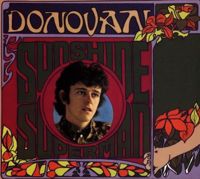
Donovan’s psychedelic singles include “Sunshine Superman,” “Mellow Yellow,” “Hurdy Gurdy Man” and “Barabajagal (Love Is Hot).” The album “Sunshine Superman” was among the first rock works to feature the sitar.
Update: Donovan will perform the “Sunshine Superman” album in its entirety this summer at the historic Royal Albert Hall. He’ll be backed at the June 3 concert by the London Contemporary Orchestra. The singer said the plan came from his wife, for whom Donovan wrote many of the album’s songs. The gig marks their 40th wedding anniversary. “This year of 2010 Linda and I celebrate our ruby anniversary and when I asked my muse what she wanted to do, she said, ‘Perform the complete “Sunshine Superman” album at the Royal Albert Hall.” Her wish is my command!” (/update)
The Rock and Roll Hall of Fame noted that Donovan “virtually single-handedly initiated the psychedelic revolution with ‘Sunshine Superman.’ ”
As an accomplished finger-picking guitarist, Donovan influenced his pals the Beatles, apparently contributing the line “sky of blue and sea of green” to “Yellow Submarine.” He was present for the Abbey Road recording of “A Day in the Life.”
“Mellow Yellow’s” mention of an “electrical banana” somehow inspired the widespread rumor that smoking peels resulted in a high. A handful of Donovan’s 1960s lyrics included references to LSD (although the musician denounced drugs at the end of the era, upon discovering meditation). “The Trip” described an LSD experience in Los Angeles.
His eerie song “Season of the Witch” became a psychedelic band staple, inspiring several musically adventurous covers, including those by Brian Auger and the Trinity, Terry Reid, and Al Kooper/Steven Stills.
The singer’s psychedelic album covers from the 1960s are classics of the genre, including “Superman,” “Mellow Yellow” and “A Gift From a Flower to a Garden.”
Donovan’s explorations were not limited to psychedelic music; he was perhaps the first artist to feature jazz in rock music, working with arranger John Cameron and longtime producer Mickey Most.
Psychedelic music is well represented in the Hall of Fame: Inductees include the Jimi Hendrix Experience, Cream, the Beatles, Pink Floyd, the Grateful Dead, Jimmy Page, Jeff Beck, the Yardbirds, the Byrds, Jefferson Airplane, Miles Davis, Traffic, Santana, Frank Zappa, the Doors and the Who.
Rock and Roll Hall of Fame inductees will be announced “in the coming weeks,” the organization said Sept. 28.
View a complete list of 2011 nominees for the Rock and Roll Hall of Fame.
‘Head’ trip: Monkees’ weird movie returns
September 21, 2010
Derided as the Monkees’ “Magical Misery Tour,” the movie “Head” brought fans the commercial suicide of the Prefab Four. Right there in the opening scene.
That curious and notorious 1968 movie returns this fall, with a new Blu-ray and a CD box set celebrating the group’s lone venture into filmmaking and psychedelia.
Asked today why “Head” retains a cult status four decades later, drummer Micky Dolenz says with a grin: “There’s no accounting for taste”
The movie, a non-linear bomb, was directed by Bob Rafelson, who went on to make “Five Easy Pieces” and “The King of Marvin Gardens” with another “Head” collaborator, Jack Nicholson.
Freed of NBC and the demands of weekly pop stardom, the band fell in with the psychedelic vibe of 1968.
Early on in the movie, the band sing-songs, “Hey, hey we are the Monkees/you know we love to please/our manufactured image/with no philosophy” — dumping on the TV theme song that introduced the fresh young actors to the nation only two years before.
The Criterion Collection will include “Head” on its Nov. 23 release of “America Lost and Found: The BBS Story” box set, along with the Rafelson films above and “Easy Rider.” (The BBS refers to Rafelson and his partners Bert Schneider and Steve Blauner. Rafelson and Schneider created the Monkees.)
Meanwhile, Rhino Handmade, the specialty unit of the Rhino WEA label, resurrects the soundtrack of “Head” with a three-disc boxed set due in late October. (text continues below)
Originally six Monkee songs and a batch of sonic clips (“I’d like a glass of cold gravy with a hair in it, please.”), the new version of the soundtrack packs in 21 previously unreleased tracks, outtakes, rarities, and live performances. There’s also a live set from the spring of 1968 and a contemporary radio interview with singer Davy Jones.
While the movie proved plenty strange, predictably the original six “Head” songs were in line with the relatively tame psychedelic songs that were finding a mainstream audience in ’68.
They were “Porpoise Song,” the movie theme written by Gerry Goffin and Carole King; Michael Nesmith’s hard rocker “Circle Sky”; Peter Tork’s “Can You Dig It”; Harry Nilsson’s “Daddy’s Song,” performed by David Jones; and “As We Go Along,” a track penned by Carole King and Toni Stern, and sung by Micky Dolenz.
The Monkees started playing their own instruments on 1967′s album “Headquarters,” to some fanfare and confusion. For “Head,” they continued to play, supported by artists such as Ry Cooder, Leon Russell, Neil Young, Jack Nitzsche, Danny Kortchmar and Dewey Martin.
None of the “Head” songs found a radio audience, but taken as a whole they hold up well in the new century. Monkees haters could find their minds expanded by this set — or at least its original six tracks.
The “Head” movie last was released on DVD in 1998. Rhino produced via its theatrical unit, still riding the success of its wholesale release of the Monkees catalog four years earlier. A few years back, Rhino created collectors editions of the Monkees’ first four albums, “Head” not among them until now.
Dolenz, in a promotional interview for the new releases explains “Head” as “a deconstruction not only of the Monkees but how people perceived them.” Helpfully, he points out that the bit where the Monkees play dandruff in the hair of actor Victor Mature is “obviously very metaphorical, about the new generation.”
The actor speaks of the Monkees in the same breath with the Beatles and Dylan, adding to the surrealism.
Among the guests in “Head” were Frank Zappa, who wrangles a cow, and boxer Sonny Liston.
We can neither confirm nor deny reports that any sequel to the movie was to be promoted as “from the producers who gave you ‘Head.’ ”
(If you order the BBS Blu-ray set from Criterion, use the promo code rhino.)
Weir’s symphonic concert looks dead
September 17, 2010
Bob Weir’s intriguing “First Fusion” collaboration with the Marin Symphony is fading away.
The concert, which would have brought Grateful Dead classics to the other long-hair music, has been “reluctantly” postponed because of poor ticket sales.
Weir had been working with Italian composer and arranger Giancarlo Aquilanti for the psychedelic-symphonic concert, planned for Oct. 22.
Tickets were going for up to $350. They’ll be refunded. The show was a benefit for the symphony and its educational programs.
Perhaps there’s hope for “Dark Star” in symphonic form, though. Technically, it’s a postponement. Noralee Monestere, the symphony’s executive director, told the Marin Independent Journal that “the postponement was realistic and in the best interest of both parties.”
Ticketmaster lists the concert as “canceled.”
The plan was for a two-part evening. First the entire symphony was to dress up a handful of Dead classics. After that, Weir and Quartet San Francisco (backed by some symphony players) were to perform music that was “improvised, imaginative, impassioned.”
Hendrix rarities set: ‘West Coast Seattle Boy’
September 15, 2010
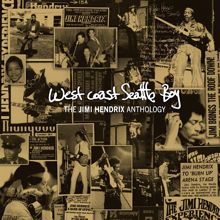
Liberation of the Jimi Hendrix archives continues Nov. 16 with the release of “West Coast Seattle Boy,” a five-disc box set.
The Hendrix estate calls the set a “definitive career-spanning collection” with more than four hours of music culled from 1964-1970.
In addition to a wealth of rare and unreleased recordings — some live, some demos and alternate takes — “West Coast Seattle Boy” includes a treat for Hendrix history buffs: a CD devoted to the guitarist’s days as an R&B sideman.
Highlights on the other three anthology CDs include a cover of Bob Dylan’s “Tears of Rage,” Hendrix’s takes on “Peter Gunn” and “Bolero,” and the “Black Gold” tapes song “Suddenly November Morning,” recorded in Hendrix’s apartment just before his death.
Disc 4 opens with three unreleased songs from the legendary New Year’s Eve shows with the Band of Gypsys: “Stone Free,” “Burning Desire” and “Lonely Avenue.”
The R&B disc delivers three numbers from the Isley Brothers and a pair each from Little RIchard, Rosa Lee Brooks (Arthur Lee) and Don Covay. Rounding out the disc are singles by Frank Howard, Ray Sharpe, the Icemen, Jimmy Norman, Billy Lamont and King Curtis. Few of these records will be familiar to non-R&B enthusiasts except for Covay’s hit “Mercy, Mercy.”
Not surprisingly, missing in action on the R&B disc are recordings with Harlem bandleader Curtis Knight, who cashed in on the Hendrix phenomenon early and often.
“West Coast Seattle Boy: The Jimi Hendrix Anthology” also contains with a DVD of the new feature-length documentary “Jimi Hendrix: Voodoo Child,” directed by Bob Smeaton, who co-directed “The Beatles Anthology” and “Festival Express.” Smeaton was given access to the Hendrix family’s personal letters and mementos.
The Hendrix family and Legacy Recordings in March released “Valleys of Neptune” and rereleased the three official Jimi Hendrix Experience albums. “Neptune” was a collection of unreleased (but bootlegged) studio recordings. The Experience album rereleases added some video content to the psychedelic classics but no upgrades in audio quality — to the dismay of many fans.
Experience Hendrix president Janie Hendrix said the new anthology “leaves no stone unturned.”
“It not only illuminates his years on both sides of the Atlantic and beautifully reveals his versatility as a performer, from his R&B origins to his explosion on the pop culture scene, but highlights who he was for those who knew and loved him,” she said.
Legacy Recordings and Experience Hendrix also are rereleasing “BBC Sessions,” “Blues,” “Live at Woodstock” and a Christmas EP on Nov. 2. A single-disc highlights CD from the box set is due as well.
View the Hendrix press release and CD tracks order.
Meanwhile, Image Entertainment is bringing to market “Jimi Hendrix: The Guitar Hero,” a documentary narrated by Slash. Part of the Classic Artists DVD series, Its goodies include silent footage from Hendrix’s ill-fated tour with the Monkees.
No. 44: ‘Maggot Brain’
September 3, 2010
The legend goes like this: Funkadelic maestro George Clinton delivered to Eddie Hazel the sad news that the young guitarist’s mother had just died. Now play a solo, Clinton said as the tape rolled.
The musicians may or may not have been on Yellow Sunshine acid at the time. Clinton may have actually told Hazel to play as if his mother had just died, and then as if she had been resurrected. Only George Clinton knows for sure, it seems.
There’s no doubt that the resulting 10-minute song — a psychedelic instrumental for the most part — ranks as one of the great rock guitar works of all time. “It really is a cosmic song,” Clinton says of the 1972 masterpiece.
“Maggot Brain” owes much to Jimi Hendrix, obviously, but Hazel’s guitar playing sounds dirtier, heavier and more tortured than anything the master performed. If Hazel’s signature song was a drug, it would be heroin.
There are echoes of spooky Pink Floyd in the simple supporting guitar pattern played (by Tawl Ross) as an intro and throughout the song. As the opus unfolds, we sense the influence of electric Miles at his darkest.
Clinton’s production sends the guitar tripping back and forth between the two stereo speakers, an ongoing phase-shifting swirl that adds to listener disorientation without wearing out its welcome.
Like most of the guitar greats, Hazel builds his solos as if in conversation. He has plenty to say here. “I wanted to make the guitar an extension of my singing,” Hazel told Guitar Player. “My style is really like solo vocalist guitar.”
One music critic described the song as Funkadelic’s “A Love Supreme.”
Two decades after it was recorded, “Maggot Brain” was played at Eddie Hazel’s funeral. Hard to imagine a more fitting eulogy for the drug-ravaged genius of funk-rock guitar. “Maggot Brain” was one of his nicknames.
Rock and heavy metal guitarists have long regarded the recording as a touchstone. Rolling Stone and Guitar World both listed it among their top guitar pieces of all time. Mojo magazine writers listed the “Maggot Brain” album as the No. 4 guitar album of all time, trailing works by Hendrix, the Who and Howlin’ Wolf (Hubert Sumlin).
Hazel’s song reached a new generation of listeners a few years back with its appearance on the Fox TV show “House.” In Cleveland, DJs have made a tradition of playing the song at a set time each Saturday night.
There exist several mixes of “Maggot Brain,” with and without this spoken intro:
Mother Earth is pregnant for the third time
For y’all have knocked her up.
I have tasted the maggots in the mind of the universe
I was not offended
For I knew I had to rise above it all
Or drown in my own shit.
The 2005 Maggot Brain album features a bonus mix that brings up the Funkadelic musicians’ playing.
There also exists an audiophile 180 gram vinyl version of the album.
Parliament Funkadelic continues to play Hazel’s song in concert.
Whoever posted this version on YouTube cut off the opening rap, to interesting effect. Dig.