Abbey Rd. for sale: home to Beatles, Floyd
February 16, 2010
Abbey Road, the London recording studio where the Beatles and Pink Floyd crafted their classic psychedelic albums, reportedly has gone on the block.
EMI built the studio in 1929 and has owned and operated it since. Numerous sources told the Financial Times that the famed studio was being sold to help lower the debt from the 2007 leveraged buyout of EMI.
Update: EMI denied the FT report a week later: “We believe that Abbey Road should remain in EMI’s ownership,” the company said. EMI said it was in talks with third-parties about revitalizing the studio.
The Beatles, an EMI act, made almost all of their recordings there, including the psychedelic-era touchstones “Strawberry Fields Forever,” “Revolver,” “Sgt. Pepper’s Lonely Hearts Club Band,” “Magical Mystery Tour,” “The White Album,” “Yellow Submarine” and “Abbey Road.”
Pink Floyd — Abbey Road’s other “house band” — tripped out in the venerable studios with “The Piper at the Gates of Dawn,” “A Saucerful of Secrets,” “Ummagumma,” “Atom Heart Mother” and “The Dark Side of the Moon.”
While previously known as a classical studio, Abbey Road briefly ruled the pop charts. In 1963, 15 out of the year’s 19 No. 1 singles were recorded there. The Beatles and George Martin worked most of their magic in Studio 2.
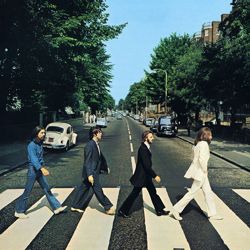
The Abbey Road brand is considered as valuable as the studio facilities. The zebra-striped traffic crosswalk featured on the cover of the Beatles’ “Abbey Road” still draws tourists from across the world to that corner of St. John’s Wood.
The studio, which can accommodate full orchestras, evolved into a film-recording destination, where scores for movies such as the “Star Wars,” “The Lord of the Rings” and “Harry Potter” series were recorded.
The mutitracking technical innovations inspired by the Beatles now can be found on laptop computer software, making Abbey Road an expensive destination for rock musicians. “If an artist goes to a label and asks to record at Abbey Road they will be met with maniacal laughter,” a media lawyer told the Financial Times in its story on Abbey Road being sold.
Both the Beatles and Pink Floyd worked with the legendary house engineer and producer Norman Smith. The later rock star Alan Parsons was a staff engineer at Abbey Road who worked on “The Dark Side of the Moon.”
The Beatles’ satellite performance of “All You Need Is Love” (from the 1967 “Our World” linkup) was captured at 3 Abbey Road.
The Zombies recorded most of the baroque psychedelic classic “Odessey and Oracle” at Abbey Road while the Pretty Things created the rock opera “S.F. Sorrow” (produced by Smith). George Harrison’s “All Things Must Pass” triple album also came to life there.
Syd Barrett made several solo albums at Abbey Road. Later, the Alan Parsons Project recorded “Tales of Mystery and Imagination” and “I Robot.” Procol Harum’s “A Salty Dog” found the space for its orchestrations in the studio complex.
Other progressive artists making albums at Abbey Road included Kate Bush, Radiohead, Mike Oldfield, XTC and Camel.
The rereleased Beatles CDs of 2009 were remastered at Abbey Road, appropriately.
‘Crazy World of Arthur Brown’ returns
February 8, 2010
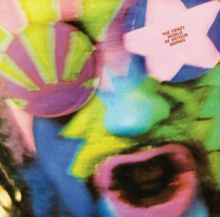
“The Crazy World of Arthur Brown” gets another shot at salvation with the release this month of a remastered special edition. The album includes a second disc of bonus material.
The hard-edged psychedelic classic returns Feb. 25 in the U.S. and Feb. 22 in the U.K. via Esoteric Recordings, which is part of the Cherry Red label group in London.
“The Crazy World of Arthur Brown” ranks No. 16 on our list of the most important psychedelic albums in rock history. (Read the full Arthur Brown review.)
The album is best known for the smash single “Fire,” with its blazing intro: “I am the god of Hellfire and I bring you fire!” The centerpiece is the “Fire Suite,” a side-long, five-track rock operetta once called “Tales From the Neurotic Nights of Hieronymous Anonymous.” (The rock opera king, Peter Townshend, associate-produced “Crazy World” with Who manager Kit Lambert.)
The CD initially came out in 1991 as a PolyGram U.K. import that, unfortunately, ruined the concept album’s concept with the appearance of four mono tracks from the album before the complete stereo version began. The 1997 release from Retroactive ran through the work before starting with the bonus tracks, which include the first three extra tracks presented here. Universal Japan put out a vinyl version in 2006, packaged in an LP cover.
The upcoming release’s bonus disc begins with “Devil’s Grip,” a 1967 single, followed by its B-side, “Give Him a Flower.” Then it’s “Music Man” (aka “What’s Happening”), the B-side of the 1968 “Nightmare” 45. (These tracks are not included in the 2003 retrospective “Fire! The Story of Arthur Brown.” The singer recut “Devil’s Grip” in 2007.)
Two songs from an April 1968 BBC Radio 1 session are led off with a short interview by Brian Matthew, the influential U.K. TV and radio personality who hosted almost all of the era’s major rock acts. (The five songs from this BBC session were previously bootlegged.)
The mono tracks of the Fire Suite return (marked as “alternate mono mixes”) along with a “first” version of “Fire.” A reprise of “Nightmare” comes from the unreleased U.K. movie “The Committee,” which features a terrific sequence with Arthur Brown (wearing a flaming headdress), the brilliant Hammond organist Vincent Crane and drummer Drachen Theaker (video below).
Here are the track listing, as provided by Esoteric.
CD 1: The original album remastered
Prelude Nightmare
Fanfare Fire Poem
Fire
Come and Buy
Time/Confusion
I Put A Spell on You
Spontaneous Apple Creation
Rest Cure
I’ve Got Money
Child of My Kingdom
CD 2: Bonus tracks
Devil’s Grip
Give Him a Flower
Music Man (Stereo mix)
Fire (first version previously unreleased)
Prelude Nightmare (alternate mono mix)
Fanfare Fire Poem (alternate mono mix)
Fire (alternate mono mix)
Come And Buy (alternate mono mix)
Time/Confusion (alternate mono mix)
Brian Matthew interview (BBC session April 1968)
Fire Poem Fire (BBC session April 1968)
Come And Buy (BBC session April 1968)
Nightmare (From the soundtrack of “The Committee” movie)
No. 26: ‘Sky Pilot’ by Eric Burdon
February 7, 2010
In 1968, Eric Burdon had completed his transition from white R&B shouter to long-haired leaping gnome.
The English singer disbanded the original Animals (of “House of the Rising Sun Fame”) in 1966 and enthusiastically turned to lysergically inspired music.
The sprawling single “Sky Pilot,” released at the dawn of that war-torn year, proved to be a game changer, one of rock’s first cinematic songs.
At more than seven minutes, the number sprawled across both sides of the 45 record, its many sonic effects captured in true stereo. Even at that length, Eric Burdon’s song was a hit single, reaching No. 14 in the U.S. and remaining an FM radio staple over the decades.
While the song’s subtle anti-war message surely concerned the Vietnam War, its shadowing invoked the two world wars. The millieu reportedly as witnessed by Burdon’s grandfather in WWI.
The titular sky pilot is a military chaplain, charged with comforting soldiers headed off to the battlefield. Burdon begins his profile a cappella against a black silence:
“He blesses the boys as they stand in line
The smell of gun grease and the bayonets they shine
He’s there to help them all that he can
To make them feel wanted he’s a good holy man”
The song picks up the pace with the entry of a rock band, lean and muscular. Moments later, “Sky Pilot” takes off on a sonic adventure incorporating bagpipes, gunfire, the screech of dive-bombers, distorted guitars and reverb-drenched vocals, flanged-out drums, horns, woodwinds and even piccolos.
Musically and conceptually, the song brings to mind the Doors’ “The Unknown Soldier” (recorded a month after “Sky Pilot’s” release), the Who’s early mini-rock operas and the Beatles’ orchestrated character studies of 1966 and 1967.
Emotionally, “Sky Pilot” recalls the Beatles’ “Eleanor Rigby,” another song about death, religion and loneliness that was released in 1966. After mumbling a prayer, the “so tired” chaplin returns to his bunk as the lads march off to their fates. “He’ll meditate/but it won’t stop the bleeding/or ease the hate.” The functionary sky pilot, we’re told, will “never reach the sky.”
At the climax of the song’s combat sequence, we hear military bagpipes play “All the Bluebonnets Are Over the Border.” Then, a string quartet provides sweet contrast to the singer’s invocation of the “stench of death” and the bleak hopes for our sky pilot. More orchestral instruments join in, freestyle, the resulting sonic swirls reflecting the absurdities of war.
Burdon shared writing credit with his “new” Animals: Vic Briggs (guitar), John Weider (guitar and electric violin), Danny McCulloch (bass), and Barry Jenkins (drums). Briggs arranged and orchestrated the song, which was produced by Tom Wilson (Bob Dylan, the Mothers of Invention). It appeared on the album “The Twain Shall Meet.”
Burdon would successfully repeat the cinematic style a few years later with the fantasy “Spill the Wine,” another strong entry on our list of the Best Psychedelic Songs.
“Sky Pilot” lyrics:
He blesses the boys as they stand in line
The smell of gun grease and the bayonets they shine
He’s there to help them all that he can
To make them feel wanted he’s a good holy man
Sky pilot,
Sky pilot,
How high can you fly?
You’ll never, never, never reach the sky.
He smiles at the young soldiers
Tells them it’s all right
He knows of their fear in the forthcoming fight
Soon there’ll be blood and many will die
Mothers and fathers back home they will cry
Sky pilot,
Sky pilot,
How high can you fly?
You’ll never, never, never reach the sky.
He mumbles a prayer and it ends with a smile
The order is given
They move down the line
But he’ll stay behind and he’ll meditate
But it won’t stop the bleeding or ease the hate
As the young men move out into the battle zone
He feels good, with God you’re never alone
He feels tired and he lays on his bed
Hopes the men will find courage
in the words that he said
Sky pilot,
Sky pilot,
How high can you fly?
You’ll never, never, never reach the sky.
You’re soldiers of God, you must understand
The fate of your country is in your young hands
May God give you strength
Do your job real well
If it all was worth it
Only time it will tell
In the morning they return
With tears in their eyes
The stench of death drifts up to the skies
A soldier so ill looks at the sky pilot
Remembers the words
“Thou shalt not kill”
Sky pilot,
Sky pilot,
How high can you fly?
You’ll never, never, never reach the sky.
No. 28: ‘Space Hymns’ by Ramases
February 5, 2010
The tale is told that the shade of Egyptian Ramesses II one day appeared before the Englishman Martin Raphael.
The big bald Raphael learned there and then that he was the reincarnation of Ramesses II — not merely a central-heating contractor. The ancient pharaoh ordered the unlikely medium to spread the secrets of the universe to the rest of mankind, using music as his vehicle.
Psychedelic music, as it turned out.
First, there were some strange singles in the late Sixties. Then “Space Hymns,” the first complete work, emerged in 1971, in the dimming of the original psychedelic era.
Despite the album cover by famed fantasy artist Roger Dean (Yes), few ever heard the musical word of Ramases — as Raphael took to calling himself. Most of those who did found the album remarkable.
Looking back, “Space Hymns” serves as one bridge between the folk-tinged psychedelia of the 1960s and the space rock/prog rock of the 1970s. Maybe a cross between the Incredible String Band and Hawkwind. It anticipates the late-century mash-ups of Arabic music and rock, as well as the neo-psychedelic folk movement of the new century.
10cc fans know the album as an early group effort from Lol Creme, Kevin Godley, Eric Stewart and Graham Gouldman, all of whom backed Ramases. Background vocals came from Ramases’ wife, now known as Selket.
(One rumor has Stewart singing the songs attributed to Ramases. This at a time when the future 10cc lads recorded at Strawberry Studios (in Stockport) under numerous fanciful names. Could Ramases be a cosmic goof? It’s a meaningless question.)
Gouldman remembers the sessions: “It was a really fine album to make. We would sit down on the floor with acoustic guitars, that kind of vibe, very hippy and mystical.”
The album’s first track, “Life Child,” opens with silence. Then a faint eerie sound out of “The Day the Earth Stood Still.” Acoustic guitars morph electric. A disembodied voice emerges, in character as an alien returned to Earth. “I see your sun is going down; I see your wreckage on the ground. … Your seas are full of poisoned water.”
The Moroccan-flavored “Oh Mister” and the straightforward acoustic number “And the Whole World” follow. Then it’s back to spaceland:
“Quasar One” wanders across almost seven minutes, with production that’ll feel familiar to 10cc fans. Chants and drums leap back and forth from the speakers. The singer fades into a sonic black hole before returning to finish his cosmic love song, the proceedings increasingly dissonant and disorienting.
“You’re the Only One” tests listeners with its one-line lyric taken from “Midnight Cowboy”: “You’re the only one, Joe.” Over and over, with acceleration. Music to freak out by.
In “Earth-People,” our alien speaks of traveling the deserts of Zeus and witnessing the birth of a planet. But he cannot navigate human communication. Nick Drake on acid. The angels in “Wings of Desire.”
“Molecular Delusions” brings more chanting, with an Arabic music influence.
“Balloon,” the catchy repetitive single, cautions Earthlings not to foul their air: “Don’t burst your bubble/or you’re in trouble.” Things that go swish and zoom race from speaker to speaker before the apocalyptic finale. “Jesus Come Back,” a similar folkie ballad, advises “no fears for the future.”
“Journey to the Inside” closes out “Space Hymns” with more 10cc phase shifting, Beatle-esque dingo balls and dark sci-fi effects. “Oh, what are you going to do with me,” Ramases asks. Psychedelic cocktail party chatter brings us to stop.
The story goes that Ramases killed himself in the late 1970s. Survivors include this fine curious rock record and one other, “Glass Top Coffin.”
The “Space Hymns” import (Repertoire label) is available via Amazon; it tends to go in and out of stock. The follow-up record, “Glass Top Coffin,” finally is being made available on CD May 2010), according to Amazon, which lists the label as Esoteric Uk/Zoom.
Read more about Martin Raphael and Ramases at Brian Currin’s fan site. Also, John Bowers has a lovely piece on his blog titled “Ramases in Felixstowe.”