No. 43: Freak Out!
October 17, 2009
It’s 1966. Psychedelia is in the air and just beginning to infect popular culture. LSD is still legal. Nehru jackets rule.
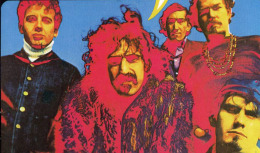
Judging the album by the cover, the first Mothers of Invention record is right in tune with the chemically charged zeitgeist. “Freak Out!” the cover screamed, atop a solarized and colorized picture of the band, which looks suitably hairy and dazed.
On the back cover, Suzy Creamcheese, a band muse of some sort, warns listeners that “these Mothers is crazy. … One guy wears beads and they all smell bad.” Hello, Frank Zappa.
Fledgling hippies expecting the new psychedelic sounds out of California were instead greeted with a bunch of greasy pop songs and doo-wop.
Psychedelic? Meh. Strange? Definitely.
Bandleader Zappa uses the liner notes to abuse his listeners, pearls before consumer swine: “None of you are perceptive enough. Why are you reading this?
“If your children ever find out how lame you are, they’ll murder you in your sleep.”
Speaking of lame, “Freak Out!” wastes most of its running time on crap. Boldly bad novelty numbers, with kazoo. Spoofs of radio music from the 1950s, wasted on the youth of the mid-60s. “Louie Louie” ripoffs. (Zappa fans have a fondness for these numbers, which at least have nostalgia going for them these days. Kids like “Wowie Zowie.”)
The lyrics are borderline demented. Zappa’s targets are easy: dumb teenagers, squares, cops and racist haters. (Zappa would get around to the hippies soon enough, two albums later, in the satirical masterpiece “We’re Only in It for the Money.)
Zappa would later claim that “each tune had a function within an overall satirical concept.”
So why does this nonsense make our list of the Top Psychedelic Albums?
“Hungry Freaks, Daddy” and “Who Are the Brain Police” are the oddly colored appetizers on Side 1, but Zappa and company finally get down to business as the mindfuck begins deep into the double-album.
“Trouble Coming Every Day” finds Zappa playing it straight, railing in a Dylan-esque stream against the madness of the Watts Riots — the song was written as they were occurring, “the fire in the street.” A fuzzed-up guitar dances over hypnotic drumming. At the break, Zappa finally shows off his significant guitar chops, riffing off “Eight Miles High.” The ending features a freak out, finally, as the song collapses on top of itself.
Then it’s on to the psychedelic wonders of the 9-minute “Help I’m a Rock”/”It Can’t Happen Here.” Zappa took no drugs, but this is the headphone masterpiece that launched zillions of acid trips.
Zappa’s multitracking lays on screams, duck calls, alien-like beeps and chatter, a female orgasm, all in the service of the drone “Help I’m a Rock.”
Then this: “Who can imagine, that they would freak out in Kansas …” prefaces a Sun Ra-inspired detour into free jazz. (”Note the interesting formal structure,” Zappa deadpans in the liner notes.)
It ends with a parting shot from Suzy Creamcheese, apparently not into Mother fucking.
“The Return of the Son of Monster Magnet” clocks in at 12 minutes. “This is what freaks sound like when turned loose in a recording studio with $500 worth of percussion eqiupment,” Zappa says in trying to explain the resulting clamor. Freak out, indeed.
Zappa would go on to refine all of his moves on this album, both as an important avant garde composer and as a novelty song satirist. “Freak Out!” eventually was included on the Grammy Hall of Fame album list and Zappa would later release an “audio documentary” CD set about its making.
Zappa immediately set about making much better albums, but this record’s final 20 minutes remains prime psychedelia, with a twist.
‘Easy Rider’: high times in high definition
October 13, 2009
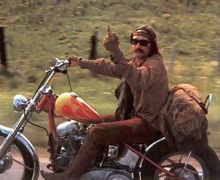
Dennis Hopper does the talking as “Easy Rider” comes to high-definition via Sony.
The “Easy Rider” Blu-ray features a feature-length commentary by the director-actor; a featurette about Hopper and partner Peter Fonda (Capt. America); as well as some BD-Live enabled content. There’s also a 32-page graphic booklet.
The previous DVD version of “Easy Rider” came out five years ago, in a 35th Anniversary Deluxe set. That version came with the DVD and a bonus soundtrack CD. The Blu-ray, appropriately, is tagged as a 40th-year edition.
“Easy Rider” is a movie that’s very much of its time — the youth of 1969 were just delighted to see long hair, drugs and nudity presented as good things in a dramatic motion picture — but no matter how the film plays today, the music hasn’t aged a bit. And this time the soundtrack comes in lossless audio.
We’re talking “If Six Was Nine” from Hendrix, “The Pusher” and “Born to Be Wild” from Steppenwolf, “The Weight” (the Band’s version) and a couple of Roger McGuinn numbers, including the dramatic finale, “The Ballad of Easy Rider.”
The Electric Prunes’ “Kyrie Ellison” adds somber weirdness to the New Orleans acid-trip scenes. Then there are the novelty songs “Don’t Bogart That Joint” and “If You Want to Be a Bird,” appealing to the Merry Pranksters among us.
Several of the songs remain in heavy rotation on FM radio, but there’s something special about flashing back to their framing in the biker movie.
Don’t blow it, man: check out “Easy Rider” in high-definition and let us know what you think.
Psychedelic era through the looking lens
October 10, 2009
Two new books of photography have touched down to transport us back to the glory days of psychedelic rock.
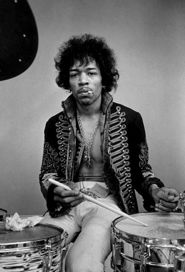
Jim Marshall has been snapping the stars since before Dylan went electric. He’s published several excellent collections of his intimate work, and now comes “Trust: Photographs of Jim Marshall,” another gallery of up-close-and-casual shots of rock gods such as the Beatles, Led Zeppelin, Janis Joplin, the Grateful Dead, Jim Morrison … all with notes from the photographer.
Get a preview in this Jim Marshall photo gallery on RollingStone.com.
Meanwhile, Zeppelin gets another going over in “Led Zeppelin: Good Times, Bad Times: A Visual Biography of the Ultimate Band,” just out in hardback. There are more than 200 photographs, about half of which have never been published. They range from the band’s first performance (as the New Yardbirds) in 1968 to the last (?) show in 2007.
Check out this Led Zeppelin photo gallery, also on Rolling Stone’s web site.
Photographs © Jim Marshall from the book “Trust: Photographs of Jim Marshall”