No. 6: Cream’s ‘White Room’
December 31, 2008
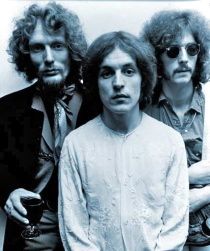
Known for its slashing wah-wah guitar solo, pounding drums and halting drug-inspired lyrics, “White Room” remains one of Cream’s heavily trafficked songs.
Although the wah-wah pedal effect on Eric Clapton’s guitar marks it as a product of the late 1960s, “White Room” feels as contemporary as anything in the Cream catalog. The rock song is marked by an unusual sophistication in the lyrics and musical structure.
Lyricist Pete Brown wrote “White Room” with bassist/singer Jack Bruce. Brown’s carefully measured poetry (doled out in four-syllable phrases) lifts this above so many trippy-nonsense lyrics of the era:
“In the white room, with black curtains, near the station, Black roof country, no gold pavements, tired starlings”
The “White Room” was a new flat (apartment) inhabited by Brown, a place where “the shadows run from themselves.” Before long, Brown must confront “the station,” perhaps the London Tube, where pain awaits as a lover departs:
“You said no strings could secure you at the station.
Platform ticket, restless diesels, goodbye windows.”
While drugs reportedly came into play in the song’s creation, this is a fine example of a psychedelic song working within the temporal confines of a rock single.
“White Room” remains a concert staple for both Bruce and Clapton. It was the penultimate song at the 2005 reunion shows.
Further reading on Cream’s “White Room”
“White Room” lyrics
“White Room” chords
Porpoise Mouth Radio: wide open
December 29, 2008
Before Psychedelic Site there was Porpoise Mouth the Internet radio station. Tune in now.
The Last.fm-based project follows this site’s philosophy that psychedelic music need not be from any particular era or genre.
And so along with Jimi Hendrix, Love, Pink Floyd, Traffic and the usual suspects from the 1960s, you’ll find sonic adventures from Ornette Coleman, Bernard Hermann, They Might Be Giants, Thelonius Monk, Nick Drake and Kate Bush.
We’ve also conjured up another “station” on lala.com, a cool newish service. Check out Psychedelic S. on lala for the latest brew.
These online collections are psychedelic crazy quilts. The criterion for inclusion is that the artists’ music provides some of the fuel for our sonic journey. Porpoise Mouth Radio and Psychedelic S. seek to challenge and elevate listeners in ways that over-the-air radio rarely does. (Continued below.)
|
|
While some commercial songs exist in the database, quite a few are explorations that would get a DJ fired PDQ. No radio format does Sun Ra. We love him.
The subtitle for the lastfm station is “Music for mushrooms and night people.” That comes from an FM program that played late nights during the late 1960s on WGBS in Miami. The first progressive radio I’d ever heard.
Of course, these are not a real radio stations. They’re big mix tapes, put togther by one guy. You can do it, too. Last.fm and similar services allow music lovers to create DIY stations without copyright concerns, another treat from the cosmos that is the Internet.
The Psychedelic Sight online stations have several hundred songs. Each week, some come and some get the boot. Check out the Porpoise Mouth library and the Psychedelic S. music stash.
These stations are quality-controlled on a Mac with good strong speakers and a trippy screen saver.
Yes, we take requests … and yes, there are no ads.
If you have a similarly exploratory Internet radio project, please leave the URL in the comments below.
‘Love Is the Song We Sing’: CD review
December 29, 2008
San Francisco more or less created psychedelic rock in the 1960s, although it can be argued that the first song worthy of that tag came from London, where the Yardbirds cooked up “Happenings 10 Years Time Ago.”
“Love Is the Song We Sing: San Francisco Nuggets 1965-1970” tracks the progression of the local sounds starting with bands influenced by the promise of the “Rubber Soul”-era Beatles and running through the golden era of psychedelia.
Rhino’s four-CD set comes in a box-sized package, with the essays and a photo gallery contained in a 120-page book. This is a coffee table CD set, if there ever were one.
There are 77 tracks, more than four hours of music. The audio is outstanding, up to Rhino’s standards in every way.
“Seismic Rumbled” (disc 1) features early contributions from the Warlocks (later the Grateful Dead) to the Great Society (later the Jefferson Airplane) and the Charlatans (Dan Hicks, hairy).
“Suburbia” (disc 2) looks back at the edgy music being created in nearby places like Berkeley and Sausalito — and especially San Jose, which produced the proto-psychedelic hit “Psychotic Reaction” from the Count Five and “Rumors” from the Syndicate of Sound.
“Summer of Love” (disc 3) is where you’ll find most of the psychedelic music that had to be in the set: “The Golden Road” (the Grateful Dead), “Omaha” (Moby Grape), “White Rabbit” (Jefferson Airplane), “Soul Sacrifice” (Santana), etc. A preview of heavy metal comes with the sonic attack of Blue Cheer’s “Summertime Blues.”
“The Man Can’t Bust Our Music” (disc 4) looks at some of the more sophisticated offerings from the scene, as acts like the Dead and Airplane buckled down to the business of being music stars. Included are It’s a Beautiful Day’s “White Bird,” the Dead’s eternal jam “Dark Star,” and “Mexico” from the late-period Airplane.
The set was produced by British rock historian Alec Palao, whose many credits include a definitive Creedence box set. He writes in the intro that there was no such thing as a ’60s San Francisco sound. At least not one that “any rote history” would cover.
“What the bands from San Francisco did have,” he writes, “was a fellowship that actively encouraged the active exploration of rock’s outer fringes.”
Ben Fong-Torres, well known to Rolling Stone readers of the era, seconds the sentiment in a short essay.
Arthur Lee’s psychedelic ‘Love Story’
December 28, 2008
Love the band should have been called Hate. At least that was the take of many who encountered Arthur Lee’s edgy psychedelic group back in the 1960s. The new documentary “Love Story,” from SO and So Video, looks back at the band that created one of the true masterpieces of rock, “Forever Changes.”
The band was so definitively L.A. that they wouldn’t leave town to promote their own records, leaving label mates the Doors to claim international stardom on Love’s promo budget.
‘Privilege’: Orwell meets Britpop
December 28, 2008
Outlaw filmmaker Peter Watkins looked into the heart of ’60s British pop music and found darkness.
For his 1967 movie “Privilege,” Watkins turned to he Nazi documentary “Triumph of the Will” — a hypnotic stream of spectacle and fervor — as a primary influence, most obviously in the nightmarish scene in which the pop star convinces a stadium full of rogue youth to convert to religion.
“We … will … conform,” they chant as the band offers a goose-stepper’s salute. Heavy and twisted.
“Privilege” starred Manfred Mann singer Paul Jones as a rock star co-opted by state and church for purposes of controlling potentially violent youth. The curious film had been largely unseen for almost four decades, and now resurfaces on a New York Films DVD.
Watkins shot the film as a bogus documentary, based largely on a Canadian short about the singer Paul Anka (”Lonely Boy” — it’s included here as an extra).
Of the “Privilege” pop puppet, the evil manager declares: “He belongs to the world, and therefore has no right to himself.” The words come almost directly from Anka’s handler in the Canadian docu.
“Privilege” has lost some of its absurdist edge because, as it predicts, today’s music stars are holistically commoditized and so frequently raped by the media. Back then, the idea of a rocker becoming a brand and fronting a large chain of discos and stores — “to spread happiness” to the masses — seemed ridiculous.
Actor/singer Jones and his onscreen girlfriend Jean Shrimpton took heat at the time for their flat, emotionless performances, which probably play better today. The supermodel Shrimpton managed to swallow every other line, but looked damned fine doing it in a druggy-hottie way.
The movie suffered numerous distribution indignities that kept it from public view until a 2005 retrospective of the director’s work. Watkins’ highbrow rant in the booklet suggests that Universal kept the movie locked away for political purposes. (Lew Wasserman … it’s a stretch).
Images look surprisingly fresh. The soundtrack lacks punch in the musical scenes, but the songs pretty much suck anyway.
There is no making-of docu, unfortunately. The Anka documentary, however, provides big value: It’s an engrossing study of teen celebrity, rabid fandom and life in the trenches of showbiz.
– Glenn Abel
More reviews like this on our DVD blogs.
Jack Bruce the cream of Hippiefest
December 28, 2008
Eric Burdon headlined, the crowd loved time-tripping with the Turtles, but only Jack Bruce delivered the transcendent at the 2008 edition of the “Hippiefest” concert tour in its L.A. stand.
Bruce, the former singer and bassist for Cream, has gone on to a prolific solo career, but he catered to the spirit of the peace-and-love package tour, playing only the songs he made famous with Eric Clapton and Ginger Baker.
The Cream reunion shows of a few years ago made it pretty clear that Clapton, at least, considered Cream to be Bruce’s band. Playing here under the stars at the Greek Theatre, Bruce replaced his famous bandmates with musicians from the Turtles’ ace band. The results remained magical.
Bruce opened solo, issuing the drones of “Deserted Cities of the Heart” on an acoustic guitar. Then it was on to the bass and “I’m So Glad,” “Sitting on Top of the World,” “Politician,” “White Room” and, of course, “Sunshine of Your Love.” Guitarist Godfrey Townsend had the crowd roaring as he raced through Clapton’s guitar parts, accurate but not slavish.
Too short a set, but with the brevity came power. (In New Jersey, Bruce played almost an hour and a half. Sigh.)
Eric Burdon and his “Animals” worked through a couple of his psychedelicized numbers — “Sky Pilot,” “San Francisco Nights” and “Paint It Black” — while also working the hits: “When I Was Young,” “Don’t Let Me Be Misunderstood” and, of course, “The House of the Rising Sun.”
Original Animal Hilton Valentine was along for the ride on guitar, obviously having big fun. A young lady played bass and took on the cheerleading chores. Burdon wore a T-shirt that declared “War on War!” which was his former band, briefly.
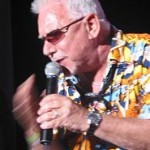
Burdon continues to be a solid shouter, although the quality of performance seems to have slipped a bit in recent years — or perhaps the act loses a bit going from club to auditorium. Still, the 67-year-old sent the crowd home humming and buzzing.
The opener was Jonathan Edwards of “Sunshine” fame, followed by original Bandfinger member Joey Molland, who ran through the ill-fated band’s hits with spirit and precision (”Baby Blue,” “Come and Get It,” “Day After Day,” “No Matter What.”)
The Turtles took the stage early due to some issue with Melanie. The set was too short, with a few great numbers left off. The crowd loved the summery sounds of “You Baby,” “It Ain’t Me Babe,” “Elenore,” “She’d Rather Be With Me” and, of course, “Happy Together.”
Why the Turtles at a hippie fest? The two singers, Mark Volman and Howard Kaylan, embraced the weird after their pop run, campaigning with Frank Zappa’s band as the The Phlorescent Leech & Eddie. They served as hosts as well, reminding the crowd of the joys of drugs and advising youngsters in the crowd that they were not particularly welcome. (They were kidding, somewhat.)
Flo chatted about his hip replacement, only months before. The hospital drugs were first-rate, he reported.
Melanie made it onto the stage to perform her hits such as “Those Were the Days” and “Brand New Key,” accompanied by her guitarist son. Back in the day, the set would be well described as a diva downer, with the artist talking as much as she sang. Time has not been kind.
The crowd — miles from L.A. hip — seemed to have a great time reviving the ’60s, with some folks dressing up Halloween-like as their former hairy selves. Night of the living hippies.
Here’s hoping Hippiefest: A Concert for Peace and Love tries for a fourth edition of its summer package tour, providing a brightly colored bookend to Ringo’s always entertaining All-Starr Band shows. Those were the days, indeed.
(Photo from this Hippiefest PhotoBucket page.)